Every morning when you wake up, your routine may include sipping coffee, checking your smartphone, or enjoying a slice of toast. Yet behind each familiar action lies a world of remarkable processes and invisible forces at work. In today’s digital landscape, understanding the hidden science in everyday life not only deepens our appreciation of the world around us but also reveals opportunities for innovation and sustainable living. From chemical reactions that give our breakfast its flavor to physical principles that govern high-speed trains and aerodynamic gear, this article unpacks key examples that illustrate the wonders of modern science woven into daily existence.
By exploring topics such as the Maillard reaction that browns your toast, surface tension that shapes water droplets, and the electroluminescence powering LED screens, you will gain fresh insights into how complex phenomena influence simple tasks. We will also examine capillary action in coffee brewing, the piezoelectric spark in lighters, and how biological processes like fermentation transform food. With at least two external references to authoritative institutions, this article equips you with reliable resources for deeper study. As you read on this year (2026), prepare to see household objects and routines through a scientific lens—revealing that each moment holds a lesson in chemistry, physics, and biology.
Food Chemistry at Home: Flavor, Extraction, and Balance
When you start your day with a piece of toast or a cup of coffee, you engage with sophisticated chemical and physical processes that chefs and scientists have studied for decades. One of the most celebrated reactions in culinary science is the Maillard reaction. Discovered by Louis-Camille Maillard in 1912, this complex series of reactions occurs between reducing sugars and amino acids at temperatures above 120 °C. The result is a cascade of hundreds of flavorful compounds and brown pigments, which give toasted bread and seared steaks their characteristic aroma and taste. Mastery of this chemistry allows cooks to optimize temperature and timing, unlocking rich, caramelized flavors from simple ingredients.
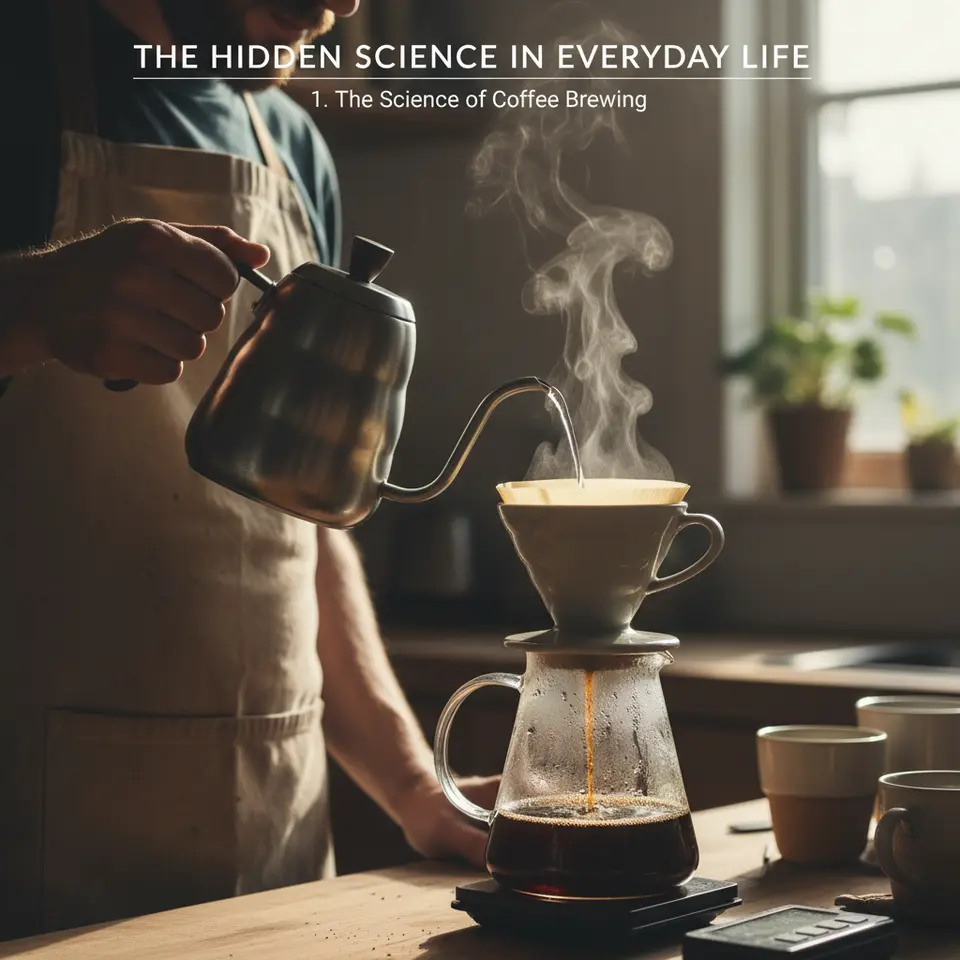
While the Maillard reaction thrills the palate, fluid dynamics shapes the perfect cup of coffee. When hot water meets ground beans in a paper filter, capillary action pulls liquid downward through microscopic pores in the filter. This balance between adhesive forces (water to paper) and cohesive forces (water to water) controls extraction efficiency. Baristas tweak grind size, water temperature, and pour rate to regulate brew strength and flavor balance—a direct application of capillarity in a familiar kitchen ritual.
Salt’s role in the kitchen also demonstrates fundamental cellular processes. Sprinkle salt on tomato slices and you trigger osmosis: water migrates from inside the tomato cells to the saltier environment outside. As semipermeable membranes equalize solute concentration, moisture is released, firming up the tomato’s texture. Chefs leverage this principle in curing meats, pickling vegetables, and marinating proteins to achieve ideal flavor and consistency. Today, understanding these food science fundamentals empowers home cooks to apply professional techniques with confidence.
Whether toasting bread, pulling espresso, or seasoning vegetables, you interact with the hidden science in everyday life. These phenomena—rooted in chemistry and fluid mechanics—demonstrate how mastering simple parameters transforms ordinary ingredients into culinary delights. For those seeking deeper insights, the U.S. Department of Agriculture offers extensive research on food chemistry and safety (USDA Food Safety).
Surface and Wave Phenomena: From Beads to Beats
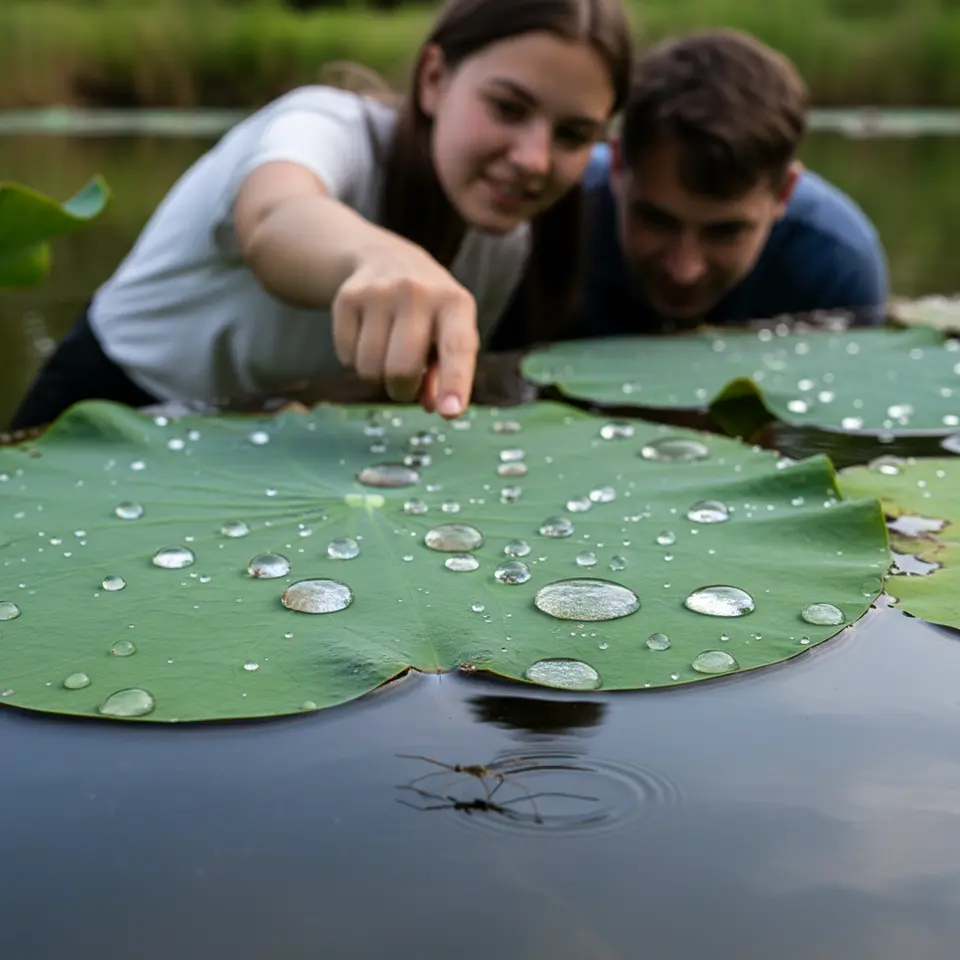
Surface tension, diffraction, and thermal radiation might sound like topics reserved for physics textbooks, yet each plays a vital role in everyday objects. Consider the tiny beads of water on a freshly waxed car or a lotus leaf. This spherical shape arises because water molecules at the surface cling more strongly to one another than to the surrounding air, minimizing surface area. Engineers mimic this “lotus effect” to create water-repellent coatings, while biologists study water striders skimming ponds by exploiting surface tension’s strength.
On another front, diffraction affects the sound you hear from smartphone speakers. When sound waves pass through the tiny holes of a grill, they spread out and interfere, altering frequency response. Acoustic engineers calculate hole size and spacing to control diffraction patterns, ensuring clear audio without compromising device protection. This interplay of mechanical design and wave physics enhances speech intelligibility and music fidelity in compact electronics.
Meanwhile, thermal radiation governs how heat dissipates from your laptop or gaming console. As components work harder, they emit infrared energy, which passes through vents and heat sinks by radiation, conduction, and convection. Engineers optimize material choices and airflow channels to manage thermal loads and maintain performance. Even without a fan running, all objects above absolute zero radiate heat—a principle that shapes electronics enclosure design and thermal management strategies.
These phenomena illustrate the hidden science in everyday life by showing how fluid mechanics, acoustics, and thermodynamics are harnessed for comfort, efficiency, and durability. For an in-depth look at aerodynamic principles underlying many of these applications, NASA provides educational resources on their official site (NASA Aerodynamics).
Light and Energy Conversion: Powering LEDs, Solar Cells, and Sparks
Electricity-to-light conversion occurs in electroluminescent LEDs, the vibrant displays in lamps, phone screens, and traffic signals. Within an LED, electrons recombine with electron holes in a semiconductor junction, emitting photons. By selecting materials such as gallium nitride or indium gallium phosphide, manufacturers produce precise colors and efficiencies. LEDs consume far less power and have longer lifespans than incandescent bulbs, illustrating how solid-state physics underpins sustainable lighting solutions.
Solar-powered chargers bring photovoltaic science to your pocket. Photons striking a silicon or thin-film semiconductor dislodge electrons, creating a current that can charge smartphones and tablets. Modern innovations in perovskite and organic photovoltaics promise even greater efficiency and flexibility, enabling foldable or transparent solar panels. Whether on a backpack strap or a rooftop installation, photovoltaic cells embody the hidden science in everyday life by converting sunlight into usable electricity.
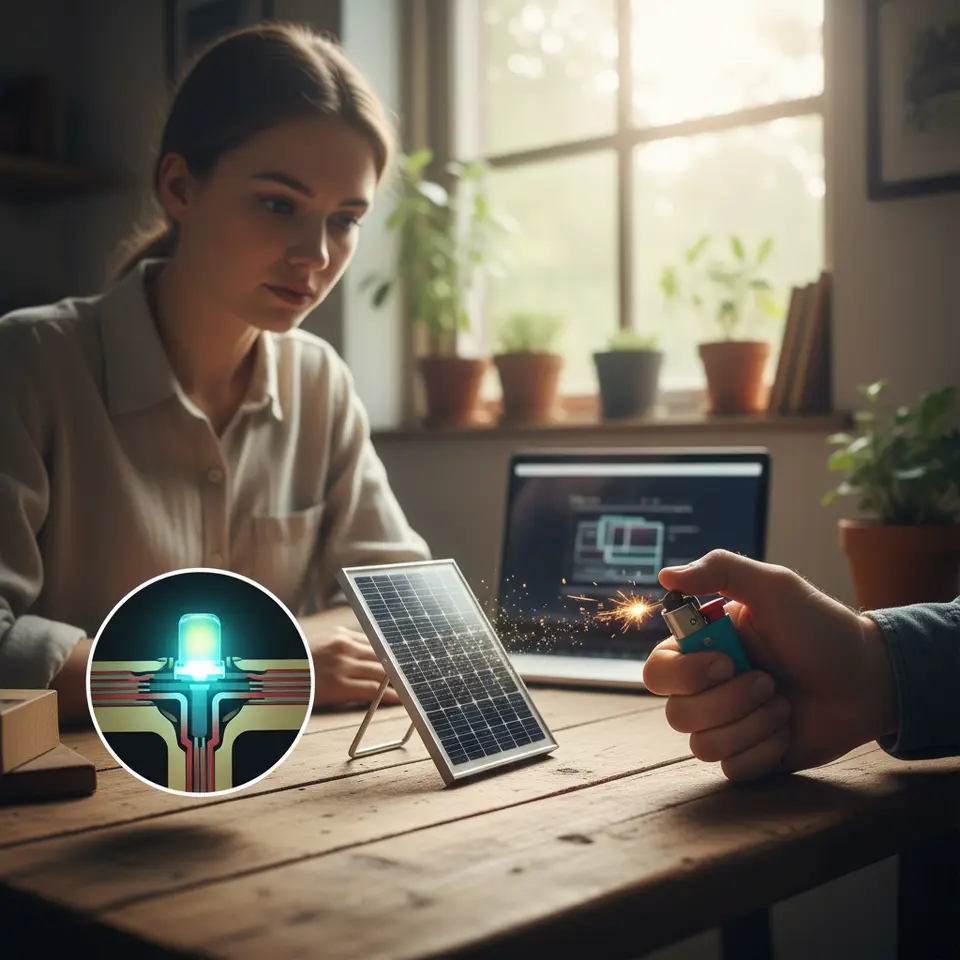
At the smaller scale, your gas lighter demonstrates the piezoelectric effect. A spring-loaded hammer strikes a quartz crystal, inducing mechanical stress that generates a high voltage. That spark ignites gas, producing flame without batteries or external power sources. Piezoelectricity also finds use in ultrasound imaging, sensors, and actuators—highlighting how mechanical forces translate into electrical signals across industries.
Together, LEDs, solar cells, and piezoelectric devices showcase the interconnection of materials science, quantum physics, and engineering. These applications illuminate our homes, provide off-grid power, and enable portable ignition solutions—powering modern life through advanced, yet hidden, scientific principles.
Mechanical Innovation: Transport, Safety, and Speed
Magnetic levitation (maglev) trains illustrate how electromagnetic theory can revolutionize transportation. In systems deployed in Japan and China, powerful superconducting magnets cooled to cryogenic temperatures induce magnetic repulsion against guideway coils. The result is frictionless travel at speeds exceeding 300 miles per hour. By eliminating physical contact with rails, maglev reduces maintenance costs and energy losses associated with rolling resistance, offering a glimpse of high-speed, energy-efficient commuting.
On a smaller scale, aerodynamic optimization influences the design of bicycle helmets worn by professional and recreational cyclists. Computational fluid dynamics (CFD) simulations model airflow patterns around helmet shells, enabling engineers to place vent channels that reduce drag and manage heat. Even marginal improvements— shaving just a few watts of resistance—can translate into seconds saved over long distances. This interplay of fluid mechanics and material science enhances both athlete performance and rider safety.
These technological advances extend beyond high-speed rail and sports equipment. The same electromagnetic principles behind maglev inform wireless power transfer for electric vehicles, while aerodynamic modeling guides automotive and aerospace design. By applying Maxwell’s equations and Navier–Stokes dynamics, innovators craft solutions that push the boundaries of speed, efficiency, and sustainability.
Microbial Processes and Sustainable Living
The tangy taste and creamy texture of yogurt result from bacterial fermentation, a biological process that has fed and preserved humanity for millennia. Live cultures of Lactobacillus and Streptococcus bacteria consume lactose sugar in milk, producing lactic acid that curdles proteins and creates the familiar yogurt consistency. Beyond flavor, fermentation boosts nutritional value by generating probiotics that support gut health and aiding digestion.
Fermentation extends far beyond dairy. Humans harness microbial power in sourdough bread, kimchi, sauerkraut, and kombucha—each relying on specific microbes to transform raw ingredients into shelf-stable, nutrient-rich foods. This year (2026), researchers continue exploring novel fermentation techniques to produce plant-based meats, biofuels, and pharmaceuticals. By tapping into microbial metabolism, science offers sustainable alternatives to conventional production methods, reducing waste and environmental impact.
Understanding these microbial processes highlights the hidden science in everyday life and encourages a culture of sustainability. Whether you enjoy yogurt for breakfast or long for the tang of fermented vegetables, these time-honored techniques demonstrate how biology shapes our diets and supports innovation in food technology. For further reading on the health benefits and safety of fermented foods, see the National Institutes of Health’s guide on probiotics and fermentation (NIH Probiotics).
FAQ
What everyday processes are influenced by the Maillard reaction?
The Maillard reaction is responsible for the browning and flavor development in foods like toast, grilled meats, and roasted coffee, creating complex aromas and tastes when sugars and amino acids react under heat.
How does diffraction improve smartphone speaker sound?
Diffraction occurs when sound waves pass through the grille holes of a smartphone speaker. By adjusting hole size and spacing, manufacturers control how the sound waves spread and interfere, enhancing audio clarity.
Can I harness fermentation science at home?
Yes, home fermentation is accessible and safe when using proper hygiene and temperatures. You can ferment foods like yogurt, sauerkraut, and kombucha using starter cultures to promote beneficial microbial growth and preserve nutrients.
Conclusion
Across breakfast tables, kitchen counters, living rooms, and transportation hubs, the hidden science in everyday life enriches our experiences and drives technological progress. From chemical reactions that flavor our meals to physics principles that streamline travel and electronics design, these phenomena reveal the intricate interactions that power modern living. Recognizing these underlying mechanisms not only sparks curiosity but also inspires innovation in sustainability, health, and engineering.
As you navigate daily routines this year, pause to appreciate the complex principles at play—in your coffee cup, your smartphone, and the trains you board. Each moment offers a window into scientific discovery waiting to be explored. By acknowledging the hidden science in everyday life, we become more informed consumers, creative problem solvers, and advocates for a world where knowledge fuels continuous advancement.