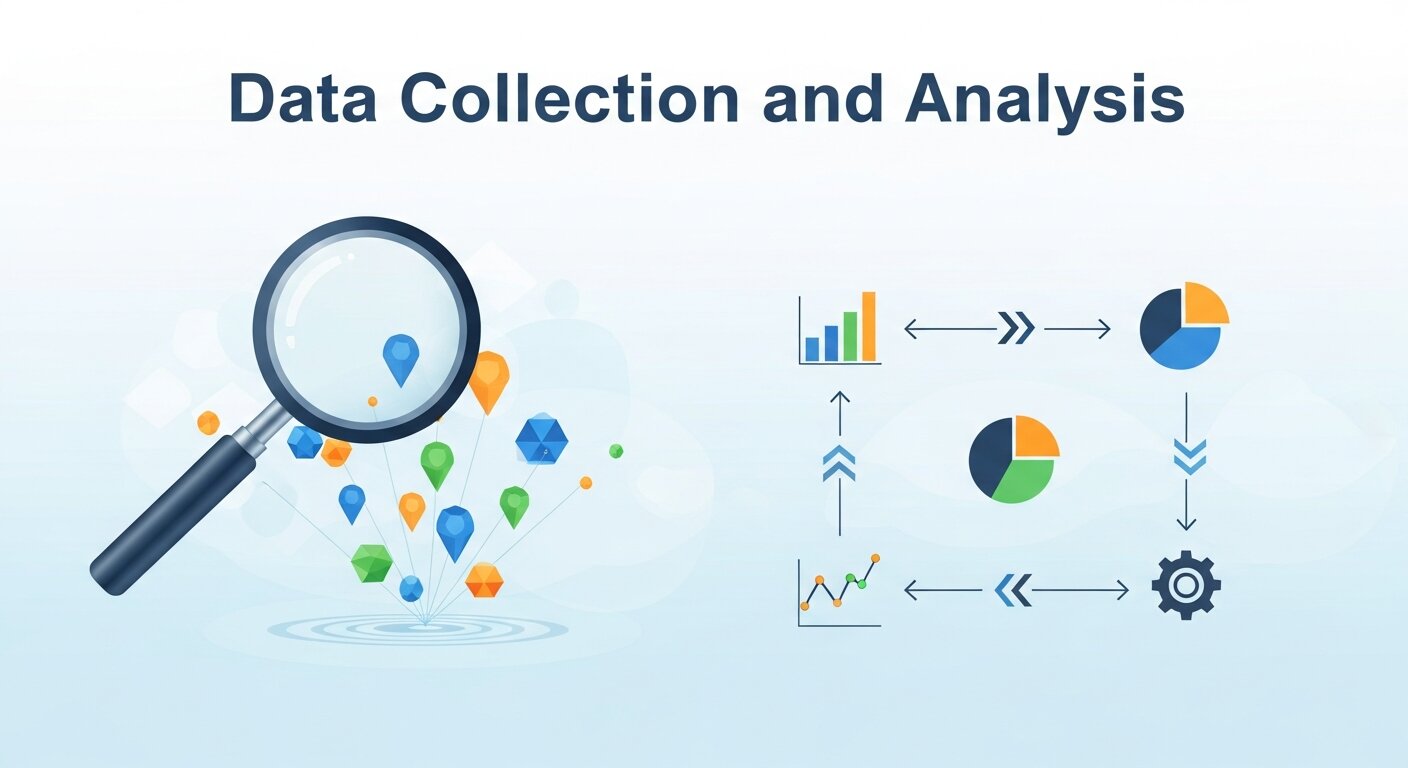
Every business generates a staggering amount of information daily. Customer interactions, website visits, sales transactions, and supply chain movements all leave a digital footprint. Having access to this information is only the beginning. The real challenge lies in understanding what those numbers mean and using them to shape your business strategy.
Making choices based on gut feeling or limited observation often leads to missed opportunities and costly mistakes. When organizations transition to a strategy rooted in hard evidence, they unlock a deeper understanding of their market, their operations, and their customers. This approach removes the guesswork from leadership, providing a clear map of what is actually happening behind the scenes.
Effective data collection and analysis create a reliable framework for growth. By systematically gathering details and critically evaluating them, companies can identify hidden inefficiencies, predict upcoming market shifts, and deliver exactly what their audience needs.
This post explains how to harness your organization’s information effectively. We will explore the mechanics of gathering accurate metrics, the process of turning raw numbers into actionable intelligence, and the tools available to streamline the entire workflow.
The Foundation of Modern Business Strategy
 Information is the raw material of good leadership. Without a reliable stream of accurate metrics, leaders are essentially navigating a ship while blindfolded. Establishing a strong analytical foundation requires a fundamental shift in how a company views its operations.
Shifting from Intuition to Evidence
Historically, many business leaders relied heavily on industry experience and intuition. While experience is valuable, it is inherently subject to personal bias and limited perspective. Human memory prioritizes recent or emotionally charged events, which can skew our perception of overall trends.
Relying on hard evidence forces an organization to confront reality. A marketing campaign might feel highly successful because of the positive feedback from a few vocal clients. The metrics, however, might reveal a high cost of acquisition and a low overall conversion rate. Confronting this reality allows teams to pivot quickly, reallocating resources to channels that actually generate revenue.
Building a Culture of Measurement
To truly benefit from metrics, an organization must cultivate a culture that values measurement. This means encouraging employees at all levels to ask questions and seek statistical backing for their proposals. When a team member suggests a new product feature, the immediate follow-up question should revolve around the evidence supporting that need.
Creating this culture requires transparent communication. Leaders must share key performance indicators with their teams, explaining how everyday tasks impact the larger goals. When employees understand the reasoning behind specific metrics, they are much more likely to support the processes required to track them.
Gathering the Right Information
The quality of your insights directly depends on the quality of your inputs. Collecting inaccurate, outdated, or irrelevant information will only lead to misguided strategies. A robust gathering process ensures you capture exactly what you need without overwhelming your systems or your staff.
Setting Up a Reliable Data Collection Form
The simplest and often most effective way to gather structured input is through a well-designed data collection form. Whether you are capturing customer feedback, generating new sales leads, or conducting internal employee surveys, a standardized form ensures consistency.
When creating these forms, clarity is critical. Ambiguous questions yield ambiguous answers. Use specific, easily understandable language, and keep the required fields to a minimum. If a user feels overwhelmed by a lengthy questionnaire, they will likely abandon it entirely or provide rushed, inaccurate answers.
Strategic placement of your data collection form also matters. Place it where the user is already highly engaged. For instance, a post-purchase feedback form should appear immediately after checkout, capturing the customer’s sentiment while the experience is entirely fresh in their mind.
The Power of Automated Data Collection
While manual forms are necessary for capturing subjective feedback, they are highly inefficient for tracking behavioral metrics. This is where automated data collection becomes essential. Automation tools run silently in the background, continuously capturing vital statistics without requiring human intervention.
Automated systems can track website traffic, monitor social media engagement, and record supply chain logistics in real time. This constant stream of information provides an incredibly detailed picture of organizational health. More importantly, automated data collection eliminates human error. People forget to log entries, misread numbers, and accidentally delete spreadsheets. Automation ensures that your database remains highly accurate, comprehensive, and up to date.
By utilizing automation, you also free up your team’s valuable time. Instead of spending hours manually entering figures into a database, employees can dedicate their energy to reviewing the results and developing new strategies.
Transforming Raw Numbers into Actionable Insights
Gathering information is only the first half of the equation. Raw metrics, sitting idle in a spreadsheet or database, offer zero business value. Data collection and analysis must work in tandem to produce results. The analytical phase involves cleaning, processing, and interpreting the numbers to find a clear narrative.
Cleaning and Organizing Your Assets
Before any serious evaluation can begin, the dataset must be cleaned. Information gathered from multiple sources often contains duplicates, formatting errors, and incomplete records. If these anomalies are not addressed, they will heavily skew the final results.
Data cleaning involves removing redundant entries, standardizing formats (such as ensuring all dates follow the same structure), and handling missing values appropriately. This step is often time-consuming, but it is entirely non-negotiable. Analyzing dirty data is akin to building a house on an unstable foundation.
Uncovering Patterns and Trends
Once the information is clean and organized, analysts can begin searching for patterns. This process usually starts with descriptive analytics, which summarizes what has happened in the past. Descriptive analytics might reveal that sales peak on Tuesday afternoons or that a specific demographic has the highest retention rate.
From there, organizations can move toward diagnostic analytics to understand why those trends occurred. If website traffic dropped significantly in March, analysts will look at external variables, algorithm updates, or changes in ad spend during that period to pinpoint the cause.
Finally, predictive analytics uses historical trends to forecast future outcomes. By understanding past consumer behavior, companies can predict upcoming demand, allowing them to optimize inventory levels and adjust staffing schedules proactively.
Real-World Applications of Data Collection and Analysis
 The theoretical benefits of evaluating metrics are clear, but the practical applications are where organizations see a massive return on investment. Across every department, hard evidence provides a distinct competitive advantage.
Enhancing Customer Experiences
Consumers expect personalized interactions. They want companies to understand their preferences, anticipate their needs, and communicate with them on their preferred channels. This level of personalization is impossible without a rigorous analytical framework.
By tracking purchase history and browsing behavior, retailers can suggest products that a specific customer is highly likely to buy. Streaming services use viewing habits to recommend relevant shows, keeping users engaged on their platforms longer. Even B2B companies use engagement metrics to tailor their sales pitches, focusing on the specific pain points a prospect has researched.
Optimizing Operational Efficiency
Internal operations benefit immensely from continuous measurement. Supply chain managers use logistics metrics to identify bottlenecks, reroute shipments, and reduce delivery times. Manufacturing facilities monitor equipment performance to predict mechanical failures before they happen, minimizing expensive downtime.
Human resources departments also leverage this framework. By analyzing turnover rates and employee feedback, HR teams can identify widespread dissatisfaction, adjust compensation packages, or improve workplace conditions to retain top talent.
Overcoming Common Data Challenges
While the benefits are substantial, implementing a data-driven strategy comes with specific challenges. Organizations must navigate technical limitations, regulatory requirements, and the sheer volume of available metrics to succeed.
Ensuring Data Privacy and Security
Consumers are increasingly aware of how their personal information is being used, and governments are implementing strict regulations to protect their privacy. Frameworks like the GDPR in Europe and the CCPA in California dictate exactly how organizations can gather, store, and utilize consumer details.
Businesses must prioritize security at every stage of the lifecycle. This requires implementing robust encryption, restricting database access to essential personnel, and being entirely transparent with consumers about what information is being collected and why. A security breach not only results in massive financial penalties but also causes irreparable damage to a brand’s reputation.
Preventing Information Overload
More information does not automatically equal better decisions. Many organizations fall into the trap of trying to track absolutely everything, resulting in massive, unwieldy dashboards that confuse rather than clarify. This phenomenon, known as analysis paralysis, prevents leaders from making timely choices.
To avoid information overload, businesses must focus exclusively on Key Performance Indicators (KPIs) that directly align with their overarching goals. If an organization’s primary objective is to increase customer retention, they should prioritize metrics like churn rate, customer lifetime value, and net promoter scores, rather than getting distracted by vanity metrics like social media impressions.
Integrating Data Across Multiple Business Systems
 Modern organizations often use multiple tools for different functions, such as CRM platforms for sales, analytics tools for marketing, and ERP systems for operations. However, when these systems operate in isolation, valuable insights remain fragmented. Integrating data across all business systems creates a unified view of your organization’s performance. This allows teams to identify connections between customer behavior, sales trends, and operational efficiency. For example, linking marketing data with sales outcomes can reveal which campaigns generate the highest revenue. A centralized data ecosystem improves collaboration, reduces duplication, and ensures decision-makers have access to accurate, real-time information for smarter strategic planning.
The Role of Data Visualization in Decision-Making
Raw numbers can be overwhelming and difficult to interpret, especially for non-technical stakeholders. Data visualization transforms complex datasets into clear, visual formats such as charts, graphs, and dashboards. These visual tools make it easier to identify trends, patterns, and anomalies at a glance. Effective visualization not only improves understanding but also accelerates decision-making by presenting insights in an accessible way. Interactive dashboards allow users to explore data from different angles, uncovering deeper insights without requiring advanced technical skills. By investing in strong visualization practices, organizations can bridge the gap between data analysis and actionable strategy, ensuring that insights are effectively communicated and utilized.
Frequently Asked Questions (FAQ)
What is the most important step in data analysis?
The most critical step is defining clear objectives before you begin. Without a specific question to answer or a problem to solve, you will likely get lost in the numbers. Clearly defining your goals dictates exactly what you need to measure and how you should evaluate it.
How do small businesses benefit from automated data collection?
Small businesses often operate with limited staff and tight budgets. Automation acts as a force multiplier, handling tedious administrative tasks like inventory tracking and customer follow-ups. This allows small business owners to focus their limited time on high-impact activities like product development and relationship building.
Can a simple data collection form really make a difference?
Yes. A carefully crafted form placed at the right touchpoint can yield invaluable insights. For example, adding a simple one-question survey to an unsubscribe page can tell you exactly why customers are leaving, allowing you to fix the root cause and prevent future churn.
What is the difference between qualitative and quantitative metrics?
Quantitative metrics are numerical and objective, such as total sales revenue or website bounce rates. Qualitative metrics are descriptive and subjective, such as customer reviews or open-ended survey responses. The most effective strategies utilize both types to gain a complete understanding of a situation.
Next Steps for Your Data Strategy
Embracing data collection and analysis is an ongoing process, not a one-time project. It requires continuous refinement, regular audits of your systems, and a commitment to adapting your strategies based on what the numbers reveal.
Start small. Identify one specific business challenge you are currently facing and determine exactly what information you need to solve it. Implement a simple data collection form or set up a basic automated tracking system to gather the necessary metrics. Review the results critically, implement changes based on those findings, and measure the outcome. As you build confidence in this evidence-based approach, you can expand your analytical efforts across your entire organization, driving smarter decisions and sustainable growth.