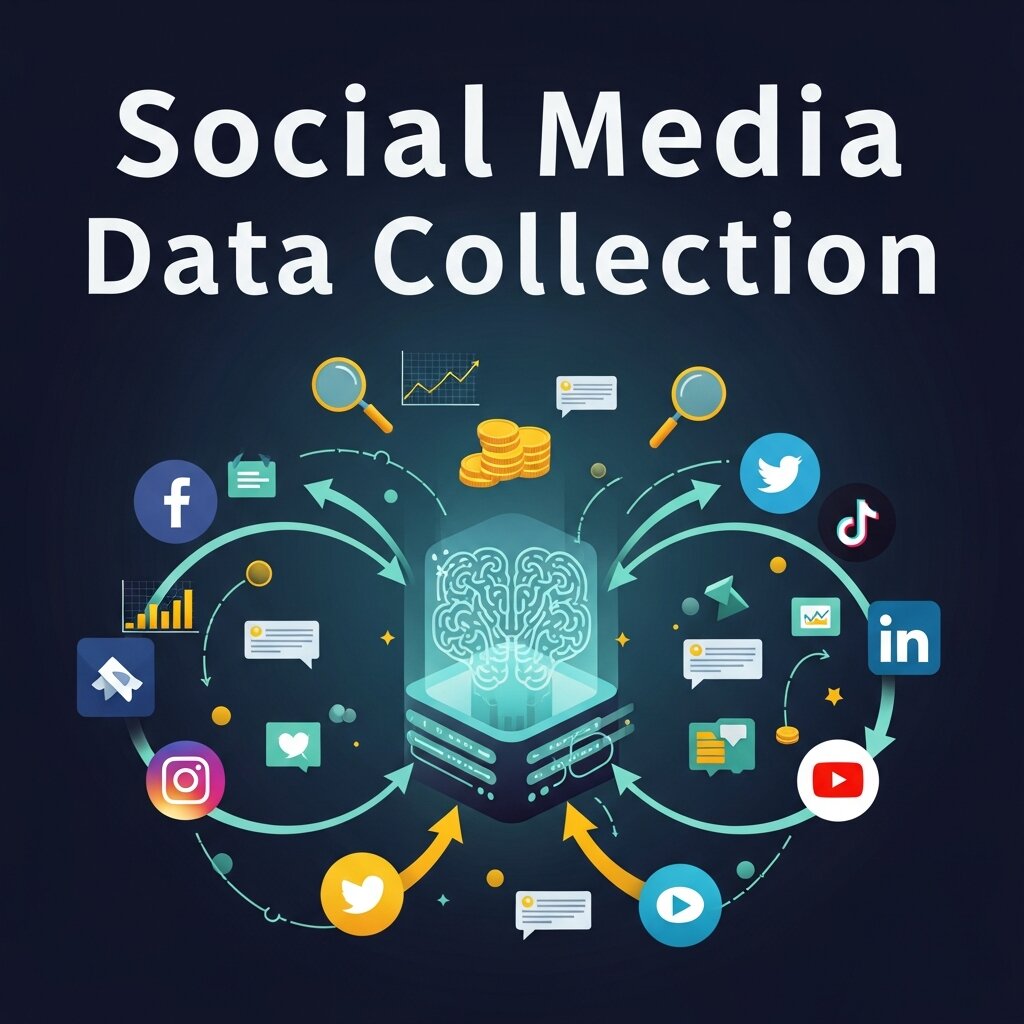
Social media platforms generate more than 500 million posts every day. Behind each post, like, comment, and share is a data point—a signal about what your audience cares about, how they behave, and what drives them to act. The brands that know how to collect and interpret that data are the ones consistently making smarter decisions.
But effective social media data collection goes far beyond downloading a CSV from Instagram Insights. It requires a structured approach, the right tools, and a clear understanding of what you’re trying to learn. Done well, it transforms raw social activity into actionable audience intelligence. Done poorly, it produces noise.
This guide covers eight proven techniques for social media data collection, along with practical guidance on how to turn that data into meaningful audience analysis. Whether you’re a marketing analyst, a social media manager, or a business owner trying to understand your customers better, these methods will give you a solid foundation to work from.
Why Social Media Data Collection Matters More Than Ever
Social media platforms have become one of the richest sources of unsolicited consumer opinion on the planet. Unlike surveys—where respondents know they’re being studied—social media captures what people genuinely think, say, and share. That authenticity is what makes social data so valuable.
Audience analysis powered by social data can help you understand which content formats drive the most engagement, what your competitors’ audiences are responding to, how brand sentiment shifts after a campaign or PR event, and which demographics are most actively engaging with your content. The challenge is that the volume of available data is enormous, the formats vary widely, and not all of it is relevant. That’s why technique matters.
8 Social Media Data Collection Techniques for Deeper Audience Insights
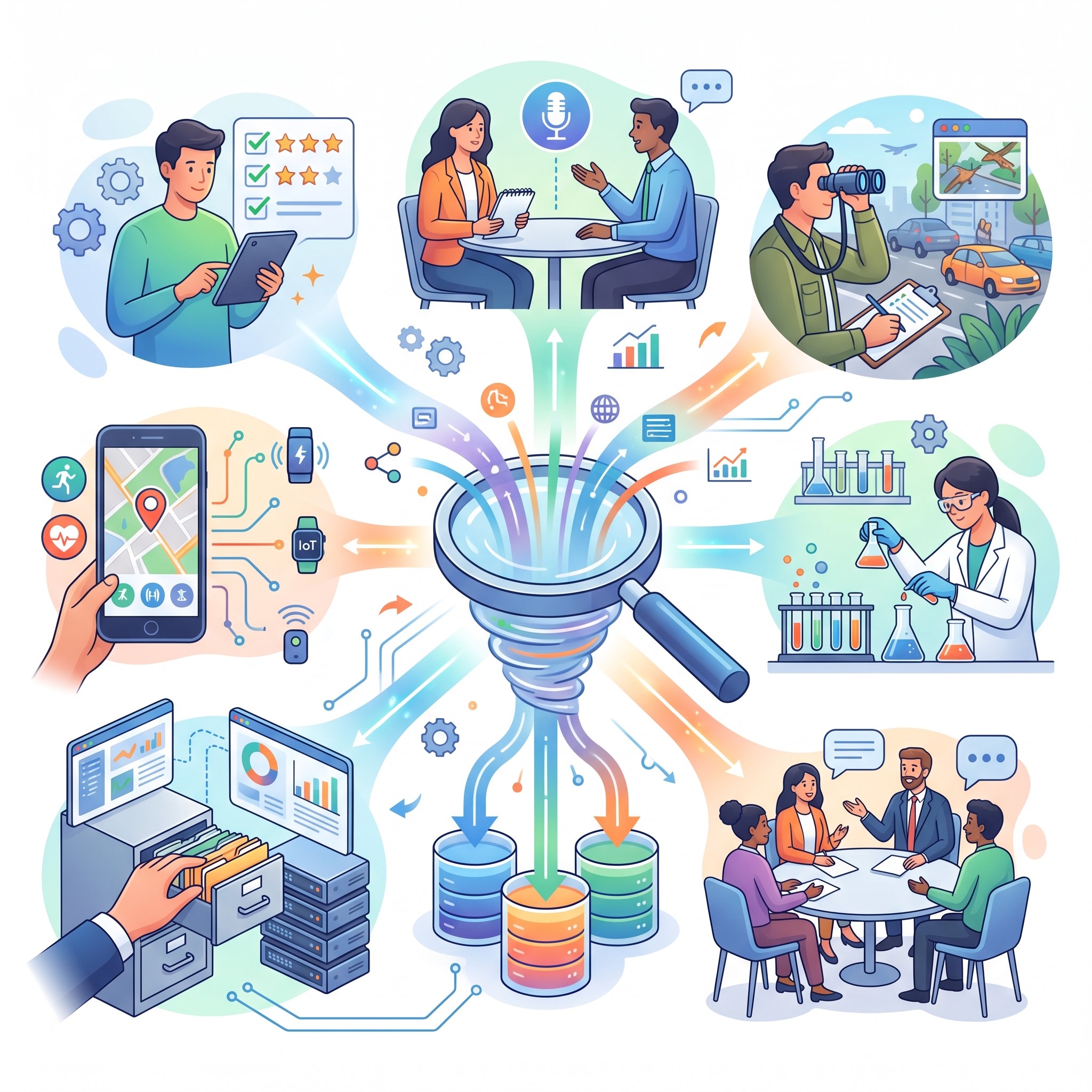
1. Platform-Native Analytics
Every major social platform—Facebook, Instagram, LinkedIn, TikTok, X (formerly Twitter), and YouTube—offers built-in analytics dashboards. These tools provide a reliable starting point for social media data collection without requiring any third-party software.
Platform-native analytics typically surface metrics like reach, impressions, engagement rate, follower demographics, and post performance over time. Instagram Insights, for example, breaks down your audience by age, gender, location, and most active hours. LinkedIn Analytics offers similar breakdowns with additional professional data like industry and job title.
The main limitation is that each platform’s data lives in a silo. Comparing performance across platforms requires manual aggregation—usually into a data collection sheet like a spreadsheet—which is time-consuming and prone to error at scale. Still, for teams just starting out with audience analysis, native analytics are free, accessible, and surprisingly rich.
2. Social Listening Tools
Social listening is the practice of monitoring online conversations about your brand, competitors, and industry keywords across social platforms, forums, news sites, and beyond. This is where social media data collection moves from reactive to proactive.
Tools like Brandwatch, Sprout Social, and Mention scan millions of posts in real time, flagging relevant conversations and aggregating them into dashboards you can analyze. You can track brand mentions (tagged and untagged), monitor specific hashtags, measure share of voice against competitors, and identify emerging trends in your niche.
What makes social listening particularly powerful for audience analysis is the context it provides. You’re not just seeing who engages with your content—you’re seeing what your broader audience talks about, what language they use, and what topics they care about beyond your brand. That context is invaluable for content strategy, product development, and customer experience improvements.
3. Hashtag Tracking and Analysis
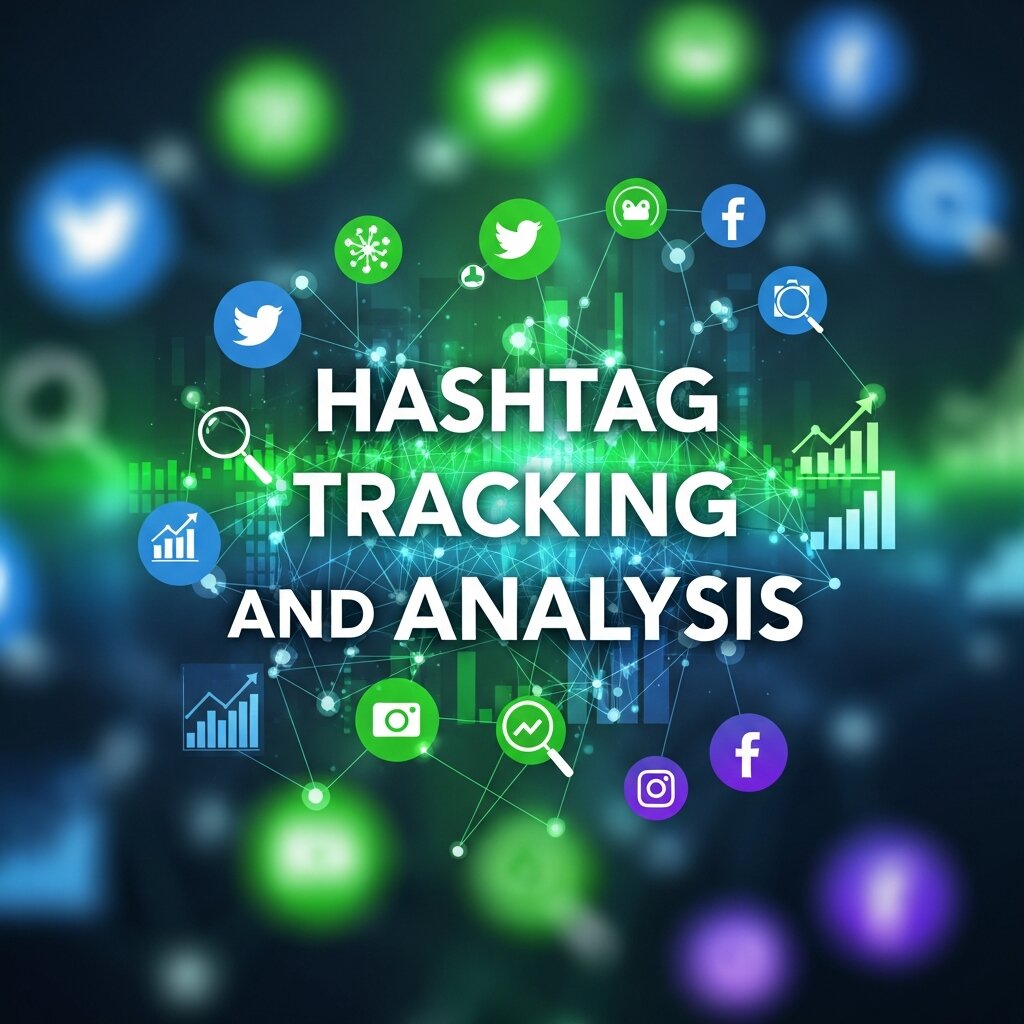 Hashtags function as self-organized content libraries. Tracking the hashtags your audience uses—and the ones trending in your industry—gives you a direct window into the conversations, interests, and communities that matter to them.
Hashtag analysis is useful for identifying niche communities within your broader audience, discovering user-generated content related to your brand, benchmarking how your branded hashtags perform over time, and spotting competitor campaigns early. Tools like Keyhole, Hashtagify, and RiteTag offer dedicated hashtag tracking functionality, while broader social listening platforms typically include this capability as well.
For more structured analysis, many teams log hashtag performance data into a data collection sheet to track volume, reach, and sentiment trends over custom time periods. This manual layer adds useful context that automated dashboards sometimes miss.
4. Surveys and Polls on Social Platforms
Sometimes the most direct way to collect audience data is to ask. Social media platforms make this easier than ever with built-in polling features—Instagram Stories polls, LinkedIn polls, X polls, and YouTube Community posts all allow you to gather structured responses directly from your followers.
This technique blends quantitative data (how many people chose each option) with qualitative insight (what those choices reveal about preferences and priorities). A well-crafted poll can validate assumptions you’ve drawn from other data sources or surface entirely new ones.
Polls work best when tied to specific decisions—testing content ideas, gauging interest in new products, or understanding what challenges your audience is currently facing. Keep questions clear and options mutually exclusive to ensure the data you collect is actually useful for analysis.
5. API Data Extraction
For teams with technical resources, accessing platform APIs (Application Programming Interfaces) opens up far more granular social media data collection than any dashboard can provide. Most major platforms offer developer APIs that allow you to pull raw data—posts, engagement metrics, user data, timestamps, geolocation tags, and more—directly into your own systems.
The Meta Graph API, YouTube Data API, and LinkedIn Marketing API are among the most widely used. With API access, you can build custom data pipelines that automate collection, store historical data at scale, and integrate social data with other business intelligence sources like CRM systems or website analytics.
API-based collection requires coding knowledge (typically Python or JavaScript) and a working understanding of each platform’s rate limits and data policies. It’s not the right approach for every team, but for organizations that need high-volume, customizable data collection, it’s the most powerful option available.
6. Third-Party Data Collection Tools
Not every team has developers on hand, and not every use case requires raw API access. Third-party data collection tools bridge the gap—offering the depth of API-level data in a more accessible interface.
Platforms like Hootsuite, Sprinklr, and Emplifi function as centralized social media management and analytics hubs. They aggregate data from multiple platforms, automate reporting, and often include competitive benchmarking features. Dedicated mobile data collection tools, like Qualtrics or SurveyMonkey’s mobile applications, are also increasingly being used to gather social insights from field teams and market researchers working in real-time environments.
When evaluating a data collection tool for social media, consider how many platforms it integrates with, whether it supports historical data access, how it handles data privacy compliance, and whether its reporting outputs align with how your team actually uses the data.
7. Competitor Analysis and Benchmarking
Your competitors’ social media activity is a data source hiding in plain sight. Analyzing what content they post, how their audience responds, and what engagement rates they achieve gives you important context for interpreting your own performance.
Tools like Similarweb, SEMrush, and Phlanx offer competitor social analysis features that surface engagement rates, posting frequency, follower growth trends, and top-performing content. Some social listening platforms also allow you to compare share of voice across competing brands in your category.
The goal isn’t to copy what competitors are doing—it’s to understand the landscape your audience is navigating. If a competitor’s educational video series is generating significantly more engagement than their promotional content, that’s a signal worth noting when planning your own content strategy.
8. Sentiment Analysis
Collecting data is only half the job. Understanding how people feel about what they’re saying is where sentiment analysis comes in. Sentiment analysis uses natural language processing (NLP) to classify social content—comments, mentions, reviews, and posts—as positive, negative, or neutral.
Many social listening platforms include sentiment analysis as a built-in feature. Brandwatch, Talkwalker, and Lexalytics are among the tools that offer robust sentiment scoring. For teams building custom solutions, open-source NLP libraries like VADER and TextBlob offer a starting point for sentiment classification.
Sentiment analysis is particularly useful for monitoring brand health after a campaign launch, tracking how public perception shifts during a PR crisis, and identifying which product features generate the most positive or negative reactions. Paired with other social media data collection methods, it adds an emotional layer to quantitative metrics that would otherwise miss the bigger picture.
Turning Social Data Into Actionable Audience Analysis
Collecting data is the first step. Making sense of it is where many teams fall short. Here are a few principles to keep your analysis focused and useful.
Start with a question, not a dataset: Before pulling data, define what you’re trying to learn. Are you trying to understand why engagement dropped last quarter? Identify which audience segment is most likely to convert? Find the content formats your audience prefers? A clear question shapes your data collection approach and prevents you from drowning in irrelevant metrics.
Use a consistent data collection sheet or template: Standardizing how you record and organize social data makes it easier to spot trends over time and share findings across teams. Even a well-structured spreadsheet can serve this purpose effectively if more sophisticated tooling isn’t available.
Triangulate across multiple sources: No single data source tells the full story. Combining platform analytics with social listening, sentiment analysis, and direct audience feedback gives you a much more complete picture than any one method alone.
Document your methodology: Social platforms change their algorithms and data policies frequently. Keeping clear records of how and when you collected data makes it easier to contextualize results and maintain consistency in longitudinal analysis.
Frequently Asked Questions (FAQs)
1. What is social media data collection?
Social media data collection is the process of gathering information from social platforms such as Facebook, Instagram, LinkedIn, X, TikTok, and YouTube. This data includes engagement metrics, audience demographics, comments, mentions, hashtags, and user interactions that help businesses understand customer behavior and improve marketing strategies.
2. Why is social media data collection important?
Social media data collection provides valuable insights into audience preferences, brand perception, and content performance. It enables businesses to make informed decisions, optimize campaigns, improve customer engagement, and develop marketing strategies based on real user behavior rather than assumptions.
3. What types of data can be collected from social media?
Businesses can collect a wide range of social media data, including likes, shares, comments, impressions, reach, follower growth, engagement rates, audience demographics, hashtag performance, brand mentions, sentiment, and click-through metrics. The available data depends on the platform and the tools being used.
4. Which tools are best for social media data collection?
Popular tools for social media data collection include native platform analytics such as Instagram Insights and LinkedIn Analytics, as well as third-party platforms like Brandwatch, Sprout Social, Hootsuite, Talkwalker, Mention, and Google Analytics. These tools help collect, organize, and analyze data from multiple sources.
5. What is the difference between social media analytics and social listening?
Social media analytics focuses on measuring the performance of your own accounts by tracking metrics such as engagement, reach, and follower growth. Social listening goes beyond your own profiles by monitoring conversations, brand mentions, competitor activity, and industry trends across the web to provide broader audience insights.
6. How often should businesses collect social media data?
The frequency depends on business goals and campaign activity. Many organizations monitor key metrics weekly, while comprehensive audience analysis and reporting are typically performed monthly or quarterly to identify trends and measure long-term performance.
7. How does sentiment analysis improve audience insights?
Sentiment analysis uses artificial intelligence and natural language processing to determine whether online conversations are positive, negative, or neutral. This helps businesses understand public perception, evaluate campaign effectiveness, identify customer concerns, and respond more effectively to changing audience sentiment.
8. Can small businesses benefit from social media data collection?
Yes. Small businesses can use social media data collection to better understand their customers, identify successful content, improve engagement, and optimize marketing efforts without requiring large budgets. Even basic analytics can provide valuable insights for business growth.
9. What challenges are involved in social media data collection?
Common challenges include managing large volumes of data, integrating information from multiple platforms, maintaining data accuracy, complying with privacy regulations, and distinguishing meaningful insights from irrelevant or misleading information.
10. How can businesses turn social media data into actionable insights?
Businesses can transform social media data into actionable insights by setting clear objectives, tracking relevant metrics, comparing data across multiple sources, identifying trends, and using the findings to improve content strategy, customer engagement, campaign performance, and overall marketing decisions.
Building a Smarter Social Media Strategy Starts With Better Data
 The gap between brands that seem to intuitively “get” their audience and those that don’t usually comes down to data discipline. Social media data collection, when done systematically, removes the guesswork from content strategy, campaign planning, and audience development.
Start by identifying which techniques align with your team’s current capabilities and resources. Native analytics and structured data collection sheets are the right entry point for most teams. As your analysis needs grow more sophisticated, layering in social listening tools, API access, and sentiment analysis will give you increasingly granular insight into what your audience wants—and how you can deliver it.