Every business decision is only as good as the information behind it. Yet for decades, companies relied on paper forms, manual entry, and scattered spreadsheets that slowed everything down. By the time leaders had the numbers they needed, the moment to act had often passed.
Electronic data collection changes that equation. Instead of waiting days or weeks to gather, clean, and analyze information, businesses can now capture data in real time and act on it almost immediately. The shift isn’t just about speed—it’s about accuracy, accessibility, and the confidence that comes from making choices grounded in solid evidence.
This post breaks down what electronic data collection actually involves, why it matters for decision-making, and how organizations can use it to sharpen strategy, cut costs, and respond faster to change. Whether you’re refining your customer research or overhauling your operations, understanding this technology will help you turn raw information into smarter calls.
What Is Electronic Data Collection?
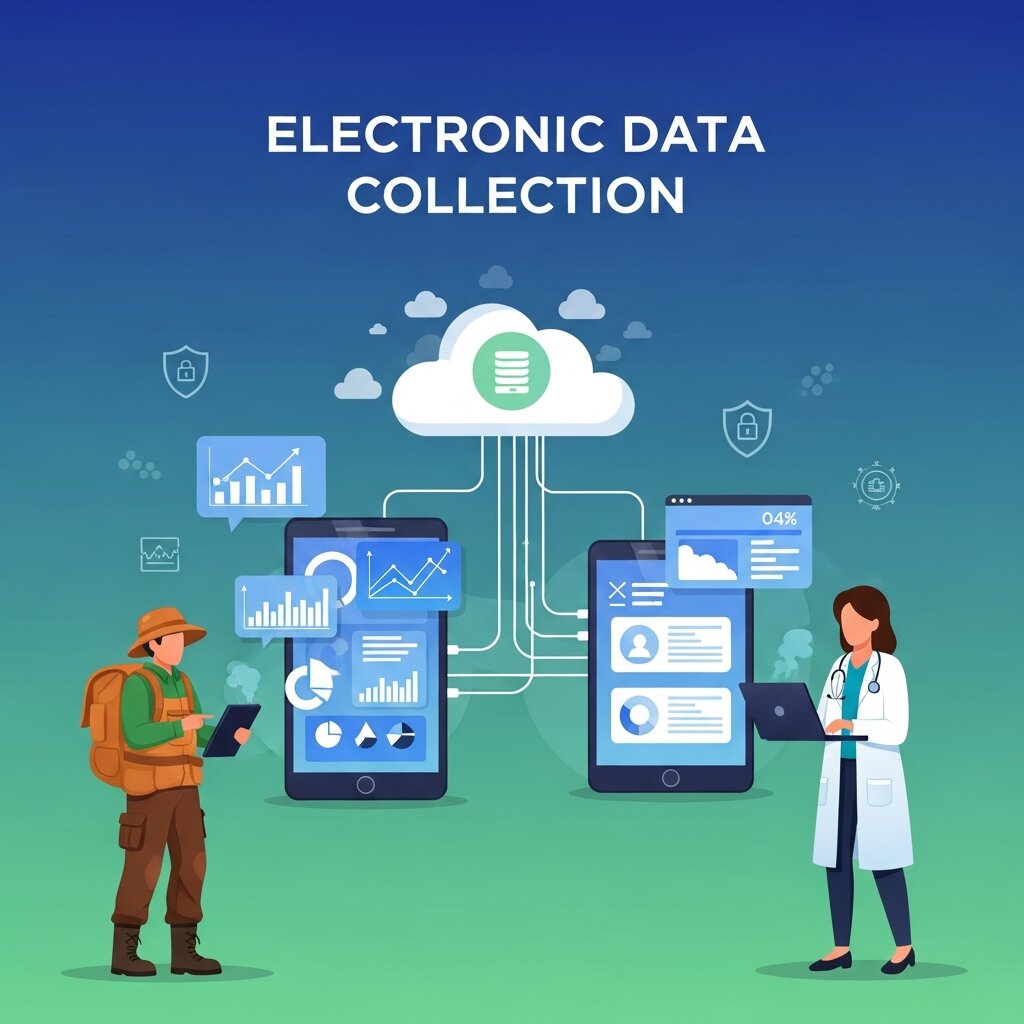
Electronic data collection is the process of gathering information through digital tools rather than paper-based methods. This includes online surveys, mobile apps, sensors, web forms, and automated systems that capture data directly from users, devices, or transactions.
Think of the difference between a clipboard and a tablet. In the past, a field researcher might fill out a paper data collection sheet, then return to the office to type each response into a computer. Today, that same researcher can enter responses directly into a digital form on a phone or tablet, where the data is instantly stored, validated, and ready for analysis.
The approach covers a wide range of methods, including:
- Online surveys and web forms that collect customer feedback or employee input
- Mobile data collection through smartphones and tablets, ideal for fieldwork and remote teams
- Automated sensors and IoT devices that track everything from temperature to foot traffic
- Point-of-sale systems that record every transaction as it happens
- Digital data collection sheets that replace paper forms with structured, error-checking templates
By removing manual steps, electronic data collection reduces the gap between when information is created and when it becomes useful.
Why Manual Data Collection Holds Businesses Back
To appreciate the value of going digital, it helps to look at the problems with the old way of doing things.
Manual data collection is slow. Someone has to write down information, transport it, and re-enter it into a system. Each step adds time and creates room for delay. A customer survey collected on paper might take weeks to process before anyone sees a single insight.
It’s also prone to error. Studies on manual data entry consistently show that human transcription introduces mistakes—misread handwriting, skipped fields, or typos that quietly distort results. When decisions rest on flawed numbers, the consequences ripple outward.
Then there’s the issue of accessibility. Paper records sit in filing cabinets. Spreadsheets live on individual computers. When information is locked away in disconnected silos, teams struggle to share it, combine it, or use it to spot patterns across the organization.
Finally, manual methods don’t scale. A small business might manage a stack of paper forms, but a growing company collecting thousands of data points across multiple locations needs a system that keeps up. Electronic data collection provides exactly that.
How Electronic Data Collection Improves Decision-Making
The real payoff of digital data gathering shows up when it’s time to make decisions. Here’s how it transforms the process.
Faster Access to Insights
When data flows in electronically, it can be analyzed almost as soon as it’s collected. Dashboards update in real time. Reports that once took an analyst a week to compile now generate automatically. This speed lets leaders respond to trends while they still matter—adjusting a marketing campaign mid-flight or reordering stock before it runs out.
Greater Accuracy and Reliability
Digital tools can validate information at the point of entry. If someone tries to enter a phone number in an email field, the form flags it. If a required question is skipped, the survey won’t submit. These built-in checks catch errors before they enter your database, so decisions rest on cleaner data.
A Single Source of Truth
When all your data lands in one connected system, everyone works from the same numbers. Marketing, sales, and operations can pull from a shared pool rather than maintaining their own conflicting versions. This alignment reduces confusion and helps teams make decisions that pull in the same direction.
Richer Context Through Qualitative Data Collection
Numbers tell you what’s happening, but they don’t always explain why. Qualitative data collection—open-ended survey responses, interview transcripts, customer comments—adds the human story behind the metrics. Electronic tools make it easier to gather and organize this kind of feedback at scale, tagging themes and surfacing recurring concerns that pure numbers might miss. Combining quantitative and qualitative inputs gives decision-makers a fuller picture.
Smarter Forecasting
With a steady stream of clean, current data, businesses can build more reliable forecasts. Historical patterns become clearer, and predictive models have better material to work with. A retailer that tracks daily sales electronically can anticipate seasonal swings far more accurately than one relying on monthly paper summaries.
Real-World Applications Across Industries
Electronic data collection isn’t limited to one type of business. Its impact stretches across sectors.
Retail uses point-of-sale data and customer surveys to fine-tune inventory, pricing, and promotions. Knowing which products move fastest in which locations helps managers stock shelves intelligently.
Healthcare relies on digital patient records and mobile data collection in the field to track outcomes, monitor treatments, and respond to public health trends. A community health worker can record patient information on a tablet and sync it instantly with a central system.
Manufacturing taps into sensor data from equipment to predict maintenance needs, reduce downtime, and improve quality control. Catching a failing machine part early saves far more than the cost of the sensor.
Field research and nonprofits depend on mobile data collection to gather information in remote areas where paper forms would be impractical. Surveys completed offline on a phone can upload automatically once a connection is available.
Hospitality and services gather real-time feedback through digital forms, letting managers address problems before a frustrated customer leaves a bad review.
In each case, the common thread is the same: better data leads to better decisions.
Best Practices for Implementing Electronic Data Collection
Adopting digital tools is only half the battle. To get real value, businesses should follow a few guiding principles.
Start with clear questions: Before collecting anything, define what you actually need to know. A focused data collection sheet built around specific goals produces far more useful results than gathering everything and hoping for insight later.
Choose tools that fit your team: A solution that’s too complex will go unused. Look for platforms that match your team’s technical comfort level and integrate with the systems you already rely on. Mobile data collection tools, for instance, should work smoothly on the devices your staff carry every day.
Prioritize data quality at the source: Build in validation rules, required fields, and clear instructions so that the information entering your system is reliable from the start. Cleaning data after the fact costs far more than preventing errors upfront.
Protect privacy and security: Collecting data digitally carries responsibility. Encrypt sensitive information, limit access to those who need it, and stay compliant with regulations like GDPR or industry-specific rules. Customers trust businesses that handle their information with care.
Train your team: Even the best tool fails if people don’t know how to use it well. Invest time in training so staff understand both the mechanics and the purpose behind the data they collect.
Review and refine: Treat your data collection process as a living system. Periodically check whether you’re gathering the right information and whether the insights are driving real action. Drop what isn’t useful and add what is.
Common Challenges in Electronic Data Collection
While electronic data collection offers significant advantages, implementation isn’t always seamless. Organizations often face challenges such as employee resistance, inconsistent data standards, and integration issues with existing software systems.
Connectivity can also be a concern, especially for teams working in remote locations. Although many mobile data collection tools support offline functionality, businesses must still plan for synchronization and backup procedures. Security is another challenge, as digital systems require strong protection against unauthorized access and data breaches. The key is to anticipate these obstacles early and create a strategy that addresses training, security, and system compatibility from the start.
The Role of Automation in Electronic Data Collection
One of the biggest advantages of electronic data collection is the ability to automate repetitive tasks. Instead of manually entering information, businesses can automatically capture data from websites, transactions, sensors, customer interactions, and connected devices.
Automation reduces administrative workloads while increasing consistency. Data can be routed directly into dashboards, reports, and analytics platforms without human intervention. This allows employees to spend less time managing information and more time acting on insights. As artificial intelligence and machine learning continue to evolve, automated data collection systems are becoming even more powerful, helping organizations identify trends and opportunities faster than ever before.
How to Choose the Right Electronic Data Collection Solution
Selecting the right platform is critical to maximizing the benefits of electronic data collection. Businesses should begin by evaluating their specific needs, including the types of data they collect, the size of their team, and their reporting requirements.
Ease of use should be a top priority. A platform that is difficult to learn can slow adoption and reduce data quality. Integration capabilities are equally important, ensuring the solution works smoothly with existing CRM, ERP, and analytics systems.
Organizations should also consider scalability. The best electronic data collection solutions can grow alongside the business, handling larger volumes of information without sacrificing performance. By choosing a flexible and secure platform, companies can build a data collection process that supports long-term growth and smarter decision-making.
FAQ Section: Electronic Data Collection
1. What is electronic data collection?
Electronic data collection is the process of gathering information through digital tools such as online surveys, mobile apps, web forms, sensors, and automated systems instead of using paper-based methods. It allows organizations to capture, store, and analyze data more efficiently.
2. Why is electronic data collection important?
Electronic data collection improves the speed, accuracy, and accessibility of information. It helps organizations make better decisions by providing real-time insights and reducing the errors commonly associated with manual data entry.
3. How does electronic data collection differ from traditional data collection?
Traditional data collection relies on paper forms and manual entry, which can be slow and error-prone. Electronic data collection captures information digitally, often validating data automatically and making it immediately available for analysis.
4. What are the main benefits of electronic data collection?
Key benefits include faster data processing, improved accuracy, reduced administrative costs, real-time reporting, easier data sharing, enhanced scalability, and better decision-making based on reliable information.
5. What tools are commonly used for electronic data collection?
Common tools include online survey platforms, mobile data collection applications, customer feedback forms, point-of-sale systems, IoT sensors, cloud databases, and business intelligence dashboards.
6. What is mobile data collection?
Mobile data collection involves gathering information through smartphones or tablets. It is particularly useful for field research, inspections, audits, healthcare visits, and remote workforce operations.
7. Can electronic data collection improve data quality?
Yes. Digital forms can include validation rules, mandatory fields, automated calculations, and error checks that help ensure data is accurate and complete before it enters the system.
8. Is electronic data collection secure?
Electronic data collection can be highly secure when organizations use encryption, access controls, secure cloud storage, and compliance measures that align with regulations such as GDPR and other data protection standards.
9. Which industries benefit most from electronic data collection?
Many industries benefit, including healthcare, retail, manufacturing, education, government, hospitality, market research, logistics, and nonprofit organizations. Any organization that relies on data can gain value from digital collection methods.
10. How can a business successfully implement electronic data collection?
Successful implementation starts with defining clear objectives, selecting user-friendly tools, training employees, prioritizing data quality, ensuring data security, and regularly reviewing processes to improve results.
Turning Data Into a Competitive Advantage
The businesses that thrive are rarely the ones with the most data—they’re the ones that use their data best. Electronic data collection lays the foundation for that advantage by delivering information that’s fast, accurate, and ready to act on.
The shift away from paper and manual entry isn’t just a technical upgrade. It reshapes how organizations think, plan, and respond. When leaders trust the numbers in front of them, they make bolder, better decisions. When teams share a single source of truth, they move together instead of pulling apart.