
Qualitative data collection is the backbone of meaningful research—yet it’s also one of the most misunderstood parts of the process. Get it right, and your findings carry real weight. Get it wrong, and even the most sophisticated analysis can’t save you.
This guide breaks down the best practices for collecting qualitative data in both academic and business contexts. Whether you’re conducting in-depth interviews, running focus groups, or building a data collection form for a survey study, you’ll find practical, actionable guidance here. By the end, you’ll know exactly how to design a collection process that yields rich, reliable, and defensible insights.
What Is Qualitative Data Collection—and Why Does It Matter?
Qualitative data collection refers to the process of gathering non-numerical information to understand experiences, opinions, behaviors, and motivations. Unlike quantitative data, which deals in numbers and statistics, qualitative data explores the “why” and “how” behind human behavior.
In academic research, qualitative methods are used to explore complex social phenomena—think ethnographies, case studies, or phenomenological research. In business, organizations use qualitative data to understand customer pain points, test new product concepts, or evaluate employee experiences.
The stakes are high in both contexts. Poorly collected data leads to flawed conclusions, wasted resources, and decisions built on shaky foundations. Strong data collection practices, on the other hand, produce findings that genuinely inform strategy, policy, or theory.
Choosing the Right Qualitative Data Collection Method
 Before collecting a single data point, you need to select the right method for your research question. The most common qualitative data collection methods include:
- Interviews: One-on-one conversations that allow for deep, nuanced responses. Best for exploring individual experiences or sensitive topics.
- Focus groups: Structured group discussions that surface shared attitudes and social dynamics. Useful when group interaction itself is informative.
- Observation: Watching participants in their natural environment. Ideal for studying behavior as it actually occurs, not as people report it.
- Document and content analysis: Reviewing existing texts, media, or records. Helpful when direct access to participants is limited.
- Open-ended surveys: Written responses collected via a data collection form or data collection app. Efficient for reaching larger samples while still capturing qualitative depth.
The method you choose should align with your research question, your access to participants, and your available resources. A mismatch here—say, using a focus group to explore a highly personal or stigmatized topic—can compromise both data quality and participant wellbeing.
Designing a Rigorous Data Collection Framework
Define Your Research Questions Clearly
Vague research questions produce vague data. Before designing your data collection instruments, articulate exactly what you want to know. A well-defined research question guides every subsequent decision—from the questions you ask participants to the way you record and store responses.
For business researchers, this might mean moving from “What do customers think of our product?” to “What specific friction points do customers encounter during onboarding?” That precision shapes everything downstream.
Develop a Structured Yet Flexible Interview Guide
For interviews and focus groups, an interview guide is essential. This document outlines your key questions and probes, ensuring consistency across sessions without stripping away the flexibility that makes qualitative research valuable.
A good guide balances structure with openness. Start with broad, open-ended questions to build rapport and encourage expansive responses. Use follow-up probes—”Can you tell me more about that?” or “What did that feel like?”—to go deeper when participants surface something important. Avoid leading questions that steer participants toward a particular answer.
Build a Thoughtful Data Collection Form
When using surveys or structured forms, the design of your data collection form has a direct impact on response quality. Keep these principles in mind:
- Use open-ended questions that invite elaboration rather than yes/no answers.
- Avoid double-barreled questions that ask two things at once. “How satisfied are you with our pricing and delivery?” should be two separate questions.
- Pilot test your form with a small group before full deployment. You’ll almost always discover confusing wording or sequencing issues.
- Keep it concise. Respondents lose focus on long forms. Prioritize questions that directly serve your research goals.
Modern data collection software and data collection apps make it easier to design, distribute, and organize responses—but the quality of your questions still determines the quality of your data.
Ethical Considerations in Qualitative Data Collection
 Ethics are non-negotiable in qualitative research. This is true for academic researchers who must satisfy institutional review boards, and equally true for businesses gathering customer or employee data.
Informed Consent
Participants must understand what they’re agreeing to. Provide clear information about the study’s purpose, how data will be used, who will have access to it, and their right to withdraw at any time. Consent should be documented—whether via a signed form, a recorded verbal agreement, or a digital acknowledgment within your data collection app.
Confidentiality and Anonymity
Qualitative data often contains sensitive personal information. Protecting participant identity is both an ethical obligation and a practical necessity—participants are more candid when they trust their responses won’t be traced back to them.
Use pseudonyms in transcripts, store identifying information separately from response data, and restrict access to raw data. If you’re using cloud-based data collection software, verify that it meets relevant data protection standards (such as GDPR or HIPAA, depending on your context).
Researcher Positionality
Qualitative data is collected by humans, and humans bring biases, assumptions, and blind spots to the process. Reflecting on your own positionality—how your background, identity, and relationship to the topic might influence your data collection—is a core practice in rigorous qualitative research.
This doesn’t mean bias can be eliminated entirely. It means being transparent about it, so readers and stakeholders can interpret findings accordingly.
Sampling Strategies That Strengthen Your Data
In qualitative research, the goal isn’t statistical representativeness—it’s information richness. That means selecting participants who can speak meaningfully to your research question, not simply those who are easiest to reach.
Purposive Sampling
Purposive sampling involves deliberately selecting participants based on specific criteria relevant to your study. A researcher studying leadership styles in tech startups, for example, would seek out founders and senior managers rather than a random cross-section of employees.
Snowball Sampling
Useful when your target population is hard to reach, snowball sampling involves asking initial participants to refer others. It’s common in research on marginalized communities, niche professional groups, or sensitive topics.
Theoretical Sampling
Used primarily in grounded theory research, theoretical sampling means making ongoing sampling decisions based on what the emerging data reveals. You continue collecting data until you reach “theoretical saturation”—the point at which new participants are no longer adding new insights.
The right sampling strategy depends on your methodology. What matters most is that your sampling decisions are intentional, documented, and justified.
Recording, Organizing, and Managing Qualitative Data
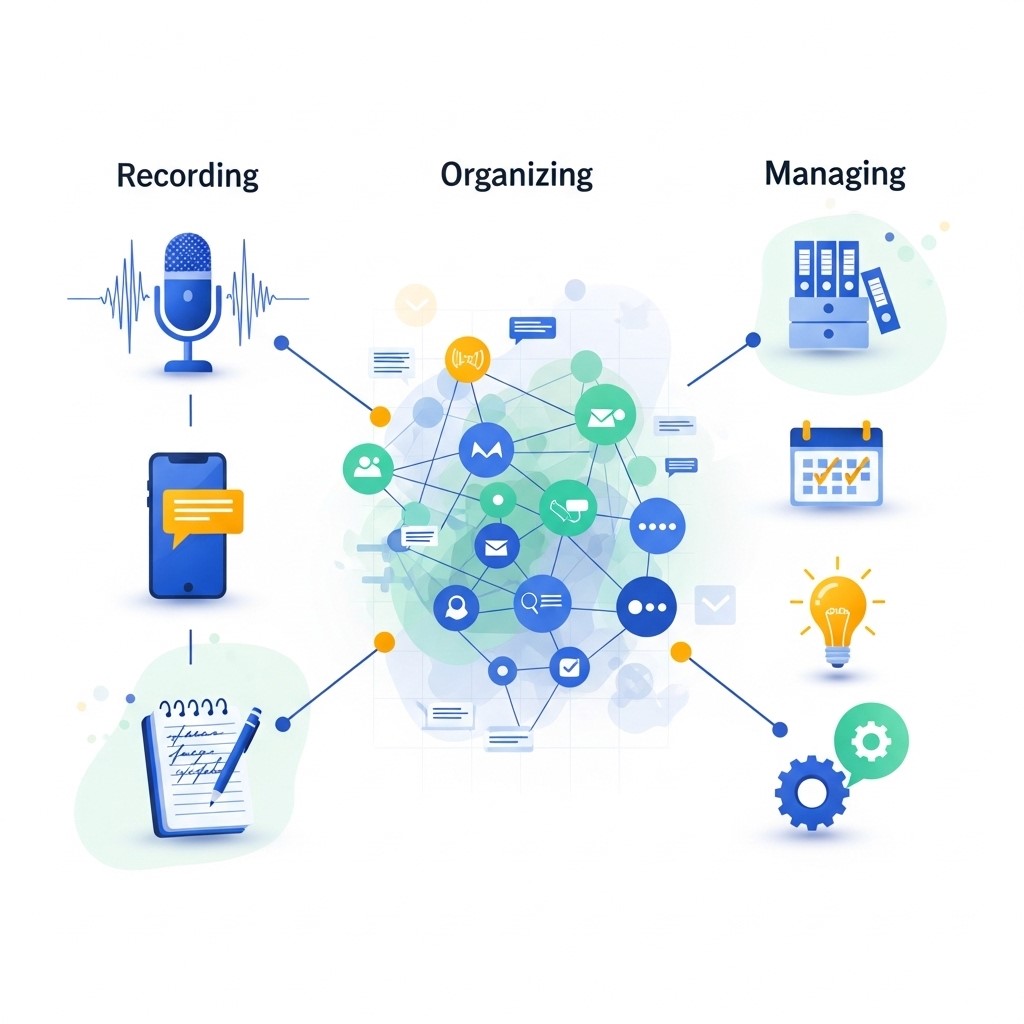 Collecting data is only half the battle. How you record and manage it shapes what’s possible during analysis.
Recording and Transcription
For interviews and focus groups, audio or video recording is standard practice—always with participant consent. Transcription converts recorded speech into written text that can be coded and analyzed. Verbatim transcription captures every word, hesitation, and interruption. Edited transcription cleans up filler words for readability. The approach you choose should align with your analytical method.
Automated transcription tools have become increasingly accurate and affordable, but always review machine-generated transcripts for errors, especially when technical vocabulary or accents are involved.
Using Data Collection Software to Stay Organized
As your dataset grows, organization becomes critical. Data collection software helps researchers manage large volumes of qualitative data, track participant information, and maintain clear documentation of their collection process. Platforms like NVivo, Atlas.ti, and Dedoose also integrate data management with qualitative analysis, making it easier to move between collecting and coding.
For business researchers using surveys or data collection apps, tools like Typeform, Qualtrics, and Google Forms offer structured ways to gather and centralize open-ended responses. Export and backup your data regularly, and maintain a clear file naming and versioning system.
Maintaining a Research Log
A research log—sometimes called a reflexive journal or field notes—documents your observations, decisions, and reflections throughout the data collection process. It captures contextual details that don’t appear in transcripts, such as the participant’s body language, the physical setting of an interview, or unexpected events that might have influenced responses.
This log becomes invaluable during analysis and write-up, and it strengthens the audit trail that reviewers and stakeholders use to evaluate the credibility of your research.
Common Pitfalls to Avoid in Qualitative Data Collection
Even experienced researchers fall into familiar traps. Here are the most common—and how to sidestep them:
- Leading questions: These subtly push participants toward a desired answer, contaminating your data. Train interviewers to ask neutral, open-ended questions and to probe without suggesting answers.
- Researcher fatigue: Long data collection periods can erode the quality of your engagement. Build in breaks, conduct regular debriefs, and rotate team members where possible.
- Insufficient documentation: Memories fade and details blur. Transcribe promptly, take thorough field notes, and document decisions as they happen—not weeks later.
- Ignoring negative cases: Findings that contradict your emerging theory are valuable, not inconvenient. Actively look for disconfirming evidence; it strengthens your analysis.
- Over-relying on a single method: Triangulation—using multiple data collection methods to study the same phenomenon—increases the robustness of your findings. If your research allows for it, combining interviews with document analysis or observation adds depth.
Frequently Asked Questions
1. What is qualitative data collection?
Qualitative data collection is the process of gathering non-numerical information to understand people’s experiences, opinions, behaviors, and motivations. It helps researchers explore the reasons behind actions and decision-making.
2. What are the main methods of qualitative data collection?
Common methods include interviews, focus groups, observations, document analysis, and open-ended surveys. Each method provides unique insights depending on the research objectives and participant access.
3. Why is qualitative data collection important?
Qualitative data collection helps researchers gain deeper insights into human behavior, customer experiences, and social phenomena. It provides context and meaning that quantitative data alone cannot capture.
4. What is the difference between qualitative and quantitative data collection?
Qualitative data focuses on descriptive information such as opinions and experiences, while quantitative data focuses on measurable information like numbers, percentages, and statistical trends.
5. How do researchers choose the right qualitative data collection method?
Researchers select methods based on their research goals, target audience, available resources, and the type of information needed. The chosen method should align closely with the research question.
6. What is a qualitative data collection form?
A qualitative data collection form is a structured tool used to gather open-ended responses from participants. It often includes descriptive questions designed to encourage detailed and thoughtful answers.
7. What role does ethics play in qualitative data collection?
Ethics ensure participant rights, privacy, and informed consent are protected. Researchers must maintain confidentiality, explain the study’s purpose, and allow participants to withdraw at any time.
8. What are some common challenges in qualitative data collection?
Common challenges include participant bias, leading questions, limited sample sizes, time-consuming analysis, and maintaining consistency throughout the data collection process.
9. What software can be used for qualitative data collection and management?
Popular tools include NVivo, Atlas.ti, Dedoose, Qualtrics, Typeform, and Google Forms. These platforms help organize, store, and analyze qualitative research data efficiently.
10. How can researchers improve the quality of qualitative data collection?
Researchers can improve quality by asking open-ended questions, using appropriate sampling methods, maintaining detailed documentation, pilot-testing instruments, and ensuring ethical research practices throughout the study.
Putting It All Together: Building a Trustworthy Research Process
Strong qualitative data collection is ultimately about building trust—trust in your process, your participants, and your findings. That means being intentional about every decision, from your choice of method to the software you use to store responses.
Rigor in qualitative research doesn’t look like statistical significance. It looks like transparency, consistency, and a commitment to capturing the complexity of human experience as faithfully as possible. Audit your process at each stage, document your decisions, and remain open to what the data is telling you—even when it surprises you.