
Ready to boost your brainpower? Mastering General Knowledge makes you a better conversationalist and critical thinker. Let us explore 30 mind-blowing facts that change how you see the world.
This comprehensive guide breaks down 30 fascinating General Knowledge facts across science, history, geography, and culture. You will discover practical ways to retain information, avoid common learning mistakes, and ultimately enhance your intellectual curiosity through proven lifelong learning strategies.
The Power of Expanding Your General Knowledge
Building a robust foundation of General Knowledge offers benefits that extend far beyond winning pub quizzes. When you actively pursue General Knowledge, you improve your brain’s neuroplasticity and enhance your overall Cognitive Development. Connecting disparate pieces of information helps you solve complex problems with creative solutions.
People with vast General Knowledge can navigate social situations with ease, relating to individuals from diverse backgrounds. Whether you are discussing the mysteries of deep space or the quirks of ancient civilizations, possessing strong General Knowledge positions you as a well-rounded, engaging individual. Let us dive into 30 essential facts that will elevate your General Knowledge to new heights.
Science and Nature: General Knowledge That Defies Logic
Science provides some of the most astounding General Knowledge available. Understanding the natural world gives us a profound appreciation for the planet and the universe.
- Water Can Boil and Freeze Simultaneously
Known as the “triple point,” this scientific phenomenon occurs when the temperature and pressure are exactly right, allowing water to exist as a gas, liquid, and solid all at once. This essential piece of General Knowledge highlights the complex rules governing thermodynamics. - Helium Has the Ability to Defy Gravity
When cooled to almost absolute zero, helium becomes a superfluid. It flows without friction, allowing it to climb up and over the sides of a glass. Expanding your General Knowledge of chemistry reveals how elements behave bizarrely under extreme conditions. - The Eiffel Tower Grows in Summer
Heat causes the iron structure of the Eiffel Tower to expand, making it up to 15 centimeters taller during the summer. Thermal expansion is a fundamental concept in physics and a classic piece of trivia for any General Knowledge enthusiast. - Bananas Are Berries, But Strawberries Are Not
In botanical terms, a berry is a fleshy fruit produced from a single ovary. Bananas fit this definition perfectly, while strawberries do not. This fun General Knowledge fact always surprises fruit lovers and challenges our everyday definitions. - Oxygen Is Not the Most Abundant Gas in the Atmosphere
Many people mistakenly believe we breathe mostly oxygen. However, nitrogen makes up about 78% of the Earth’s atmosphere. Knowing the composition of the air we breathe is a crucial component of scientific General Knowledge. - The Human Stomach Can Dissolve Razor Blades
Acids are measured on a pH scale from 0 to 14. Human stomach acid typically ranges from 1.0 to 2.0, meaning it is incredibly strong. This biological General Knowledge proves just how resilient the human body is.
Historical General Knowledge: Uncovering the Past
History shapes our present. Expanding your General Knowledge of historical events helps you understand societal progression and cultural evolution. You can explore more historical archives at the Smithsonian Institution to deepen your understanding.
- Cleopatra Lived Closer to the Moon Landing Than the Pyramids
The Great Pyramid of Giza was built around 2560 BC, while Cleopatra lived around 30 BC. The Apollo 11 moon landing occurred in 1969 AD. This General Knowledge fact drastically shifts our perspective on Historical Timelines. - Oxford University Is Older Than the Aztec Empire
Teaching at Oxford started around 1096. The Aztec Empire began in the 14th century. This chronological General Knowledge highlights how deeply rooted some modern institutions actually are. - The Shortest War in History Lasted 38 Minutes
The Anglo-Zanzibar War of 1896 is the shortest recorded war. Zanzibar surrendered just 38 minutes after the conflict began. Military General Knowledge often features bizarre extremes like this brief battle. - Alexander the Great Was Buried Alive
Scientists now believe Alexander suffered from Guillain-Barré Syndrome, a neurological disorder. People thought he was dead because he was paralyzed and his breathing was shallow. Medical General Knowledge applied to history often solves ancient mysteries. - The Great Wall of China Uses Sticky Rice
Workers used a mixture of slaked lime and sticky rice soup as mortar to bind the bricks of the Great Wall. This architectural General Knowledge showcases the ingenuity of ancient engineering. - Witches Wrote the First Brewing Recipes
The stereotypical “witches’ brew” actually stems from alewives, women who brewed beer in medieval Europe. They wore tall hats to be seen in crowded markets and kept cats to protect the grain from mice. This cultural General Knowledge reveals the truth behind famous myths.
Geographical General Knowledge: Our Bizarre Planet
Geography dictates weather, culture, and survival. Improving your geographical General Knowledge helps you navigate the global landscape conceptually and literally. Institutions like National Geographic provide excellent resources for expanding your worldview.
- Russia Has 11 Time Zones
Due to its massive size, Russia spans 11 different time zones. When it is morning in western Russia, it is evening in the eastern part. This spatial General Knowledge illustrates the sheer scale of our planet. - Australia Is Wider Than the Moon
The moon sits at 3,400 kilometers in diameter, while Australia’s diameter from east to west is nearly 4,000 kilometers. Visualizing this General Knowledge fact puts planetary geography into a startling new perspective. - Canada Has the Most Lakes in the World
More than half of all the natural lakes in the world reside in Canada. There are over 3 million lakes in the country. Environmental General Knowledge reminds us of the diverse ecosystems present globally. - Mount Everest Is Not the Tallest Mountain
While Everest has the highest altitude above sea level, Mauna Kea in Hawaii is taller when measured from its base on the ocean floor. Topographical General Knowledge requires precise definitions to understand the earth’s features accurately. - There Are No Rivers in Saudi Arabia
Wait, this is a myth! Saudi Arabia actually has no permanent rivers, only wadis (temporary valleys). True geographical General Knowledge requires separating popular myths from factual terrain data. - Africa Spans All Four Hemispheres
Africa is the only continent that stretches across the northern, southern, eastern, and western hemispheres. This unique positioning makes it a fascinating subject for General Knowledge enthusiasts.
Animal Kingdom General Knowledge: Wild Wonders
Animals exhibit behaviors and traits that seem like pure fiction. Collecting General Knowledge about animals enriches your understanding of biology and evolution.
- Octopuses Have Three Hearts and Blue Blood
Two hearts pump blood to the gills, while the third pumps it to the rest of the body. Their blood contains hemocyanin, a copper-rich protein, turning it blue. Marine General Knowledge frequently sounds like science fiction. - Wombats Have Cube-Shaped Poop
This unusual biological trait prevents the feces from rolling away, allowing wombats to mark their territory effectively. This humorous General Knowledge fact demonstrates how evolution solves practical problems. - Cows Have Best Friends
Research shows that cows become stressed when separated from their preferred companions. Understanding animal psychology is a growing field within General Knowledge that emphasizes the emotional depth of livestock. - A Group of Flamingos Is Called a Flamboyance
Collective nouns are a staple of General Knowledge trivia. A group of crows is a murder, a group of owls is a parliament, and a group of flamingos is a flamboyance. - Sloths Have Algae Growing in Their Fur
Because sloths move so slowly, their fur functions as a micro-ecosystem, hosting algae that provide camouflage in the green canopy. Ecological General Knowledge highlights symbiotic relationships in nature. - Butterflies Taste with Their Feet
Butterflies have taste receptors on their feet to help them find their host plants and locate food. Insect General Knowledge reveals sensory mechanisms completely alien to human experience.
Human Body General Knowledge: Biological Marvels
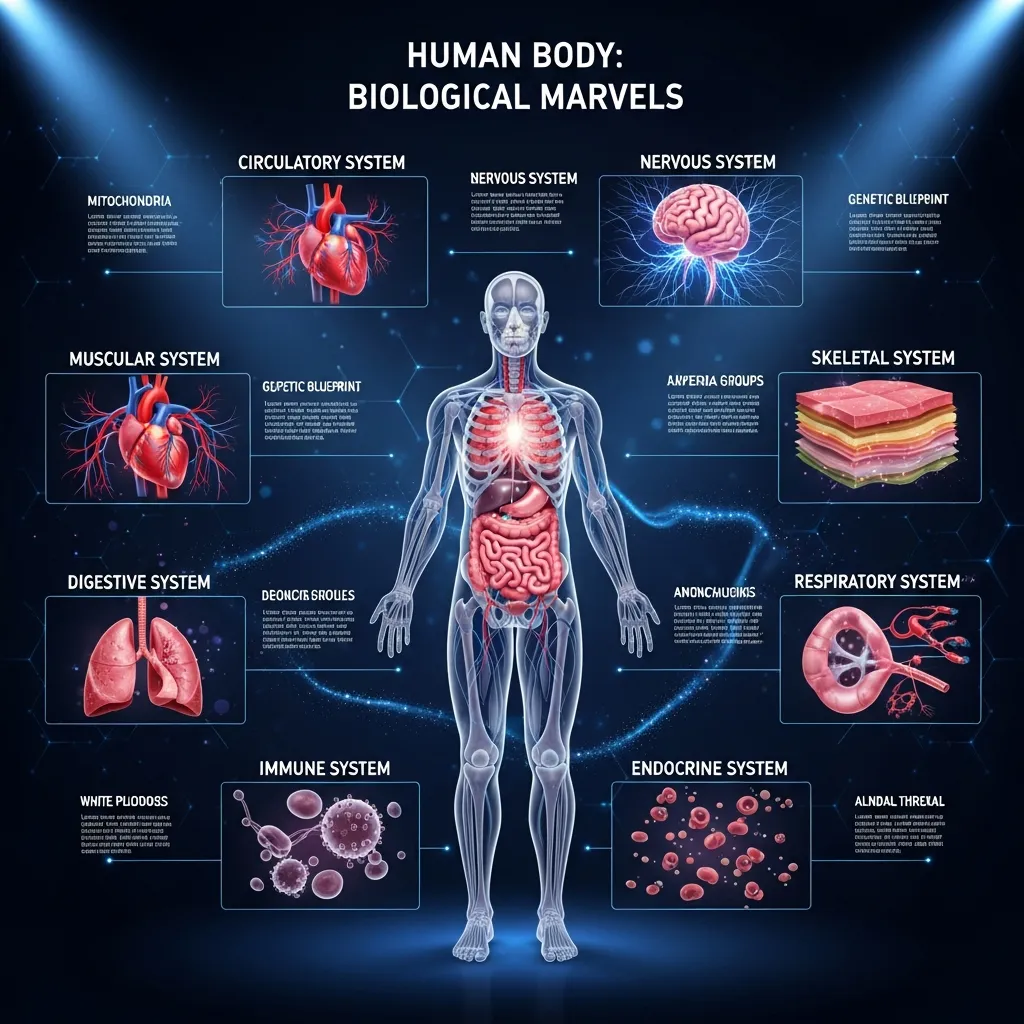
Your own body is a wonderland of strange and incredible facts. Medical and anatomical General Knowledge empowers you to understand your health and physiology better.
- You Lose About 50 to 100 Hairs a Day
Hair shedding is a normal part of the human hair growth cycle. Knowing this basic General Knowledge prevents unnecessary panic about daily hair loss. - Your Nose and Ears Never Stop Growing
Unlike the rest of your body, the cartilage in your nose and ears continues to change and grow as you age. Anatomical General Knowledge explains the physical changes we experience over a lifetime. - Humans Are the Only Animals That Blush
Blushing is a unique physiological response triggered by embarrassment or social anxiety. Psychological General Knowledge bridges the gap between our physical bodies and our complex social emotions. - The Human Eye Can Distinguish 10 Million Colors
Our vision is incredibly advanced, allowing us to perceive slight variations in hue and saturation. This piece of General Knowledge highlights the sophisticated engineering of the human optic nerve.
Pop Culture and Inventions: Modern General Knowledge
Understanding pop culture and modern history is essential for well-rounded General Knowledge. These facts frequently come up in casual conversation and Trivia Games.
- The First Computer Mouse Was Made of Wood
Invented by Doug Engelbart in 1964, the first computer mouse featured a wooden shell and two metal wheels. Technological General Knowledge shows how far our everyday tools have evolved. - Barbie’s Full Name Is Barbara Millicent Roberts
Introduced in 1959, the iconic doll actually has a full name and a fictional backstory. Pop culture General Knowledge like this provides context for the media and toys that shape childhoods globally.
Mini-Conclusion: The Breadth of General Knowledge
These 30 facts represent just a fraction of the vast expanse of General Knowledge available to us. By consistently feeding your brain with diverse information, you improve your ability to think critically and communicate effectively.
General Knowledge vs. Specialized Knowledge
To fully appreciate General Knowledge, you must understand how it differs from specialized knowledge. Here is a breakdown of the key differences.
|
Feature |
General Knowledge |
Specialized Knowledge |
|---|---|---|
|
Scope |
Broad and diverse across many subjects |
Narrow and focused on one specific field |
|
Depth |
Surface-level to moderate understanding |
Deep, comprehensive, and highly detailed |
|
Application |
Everyday conversation, trivia, broad problem-solving |
Professional tasks, technical problem-solving |
|
Acquisition |
Reading, observing, daily experiences |
Formal education, targeted training, certifications |
|
Audience |
Relatable to the general public |
Relatable mostly to peers within the same industry |
Understanding this distinction helps you balance your learning approach. While specialized knowledge builds your career, General Knowledge builds your character and social connectivity.
Common Mistakes to Avoid When Building General Knowledge
Acquiring General Knowledge is an ongoing journey. However, learners often fall into traps that hinder their progress.
- Relying on Unverified Sources: The internet contains vast amounts of false trivia. Always fact-check your General Knowledge using reputable sites and primary sources.
- Cramming Information: Trying to memorize hundreds of facts in one sitting leads to burnout. Consistent, daily reading builds General Knowledge much more effectively.
- Ignoring Context: Memorizing a fact without understanding the “why” or “how” behind it makes the information useless. Always seek the context surrounding your General Knowledge.
- Staying in an Echo Chamber: Reading only about subjects you already like limits your General Knowledge. Force yourself to explore uncomfortable or unfamiliar topics to truly expand your mind.
Expert Insights: Pro Tips for Retaining General Knowledge
Building a massive library of General Knowledge requires solid Memory Retention Techniques. Use these expert strategies to keep facts locked in your brain.
- Teach Someone Else: The best way to solidify General Knowledge is to explain it to a friend. Teaching forces your brain to organize the information logically.
- Use Spaced Repetition: Review new General Knowledge facts over increasing intervals of time. This psychological technique moves information from short-term to long-term memory.
- Connect Facts to Emotions: You remember things better when they make you laugh or gasp. Seek out General Knowledge that provokes an emotional reaction.
- Play Daily Quizzes: Engage with trivia apps and daily puzzles. Gamifying your learning makes absorbing General Knowledge fun and competitive.
Conclusion
Expanding your General Knowledge is a rewarding pursuit that sharpens your mind, enriches your conversations, and broadens your understanding of the universe. By absorbing these 30 fascinating facts and applying smart learning strategies, you equip yourself with the tools to become a lifelong learner. Keep exploring, stay curious, and make building your General Knowledge a daily habit. Start testing your friends with these facts today!
FAQs
What exactly is General Knowledge?
General Knowledge refers to culturally valued knowledge communicated by a range of non-specialist media. It covers a broad spectrum of topics, including history, geography, science, art, and pop culture. Having strong General Knowledge means you understand a little bit about a lot of different things.
Why is General Knowledge important for students?
General Knowledge improves a student’s reading comprehension, critical thinking, and problem-solving skills. It provides a framework that helps them understand new concepts faster. Furthermore, General Knowledge boosts confidence in academic and social settings.
How can I improve my General Knowledge daily?
You can improve your General Knowledge by reading diverse news sources, listening to educational podcasts, and reading non-fiction books. Making a habit of looking up words or concepts you do not understand immediately expands your General Knowledge over time.
Does playing video games help with General Knowledge?
Yes, specific educational and historical video games can boost General Knowledge. Strategy games set in historical periods or puzzle games requiring logical deduction introduce players to new facts and concepts, organically building their General Knowledge base.
What is the difference between IQ and General Knowledge?
IQ (Intelligence Quotient) measures your cognitive abilities, such as logic, spatial awareness, and reasoning. General Knowledge is crystallized intelligence, meaning it measures the actual facts and information you have acquired and retained over your lifetime.
How does General Knowledge help in career advancement?
General Knowledge makes you adaptable and capable of understanding different departments within a business. It improves your ability to make small talk, network effectively, and draw creative parallels between different industries, all of which accelerate career growth.
Are trivia and General Knowledge the same thing?
Trivia typically refers to obscure, minor details that may not have broad cultural importance. General Knowledge encompasses more significant, culturally relevant information. However, the terms are often used interchangeably in games and quizzes.
Can learning General Knowledge prevent memory decline?
Yes, actively learning new General Knowledge stimulates the brain, creating new neural pathways. Engaging in lifelong learning and trivia exercises is linked to delayed onset of cognitive decline and improved overall brain health in older adults.
What are the best books for improving General Knowledge?
Books like “A Short History of Nearly Everything” by Bill Bryson and “Sapiens” by Yuval Noah Harari are excellent for building General Knowledge. Encyclopedias, almanacs, and curated trivia books also provide concentrated doses of General Knowledge.
How do I verify if a General Knowledge fact is true?
Cross-reference the fact using reliable sources such as academic journals, government websites, or established educational institutions. Avoid taking social media posts at face value, and always look for a consensus among experts to validate your General Knowledge.