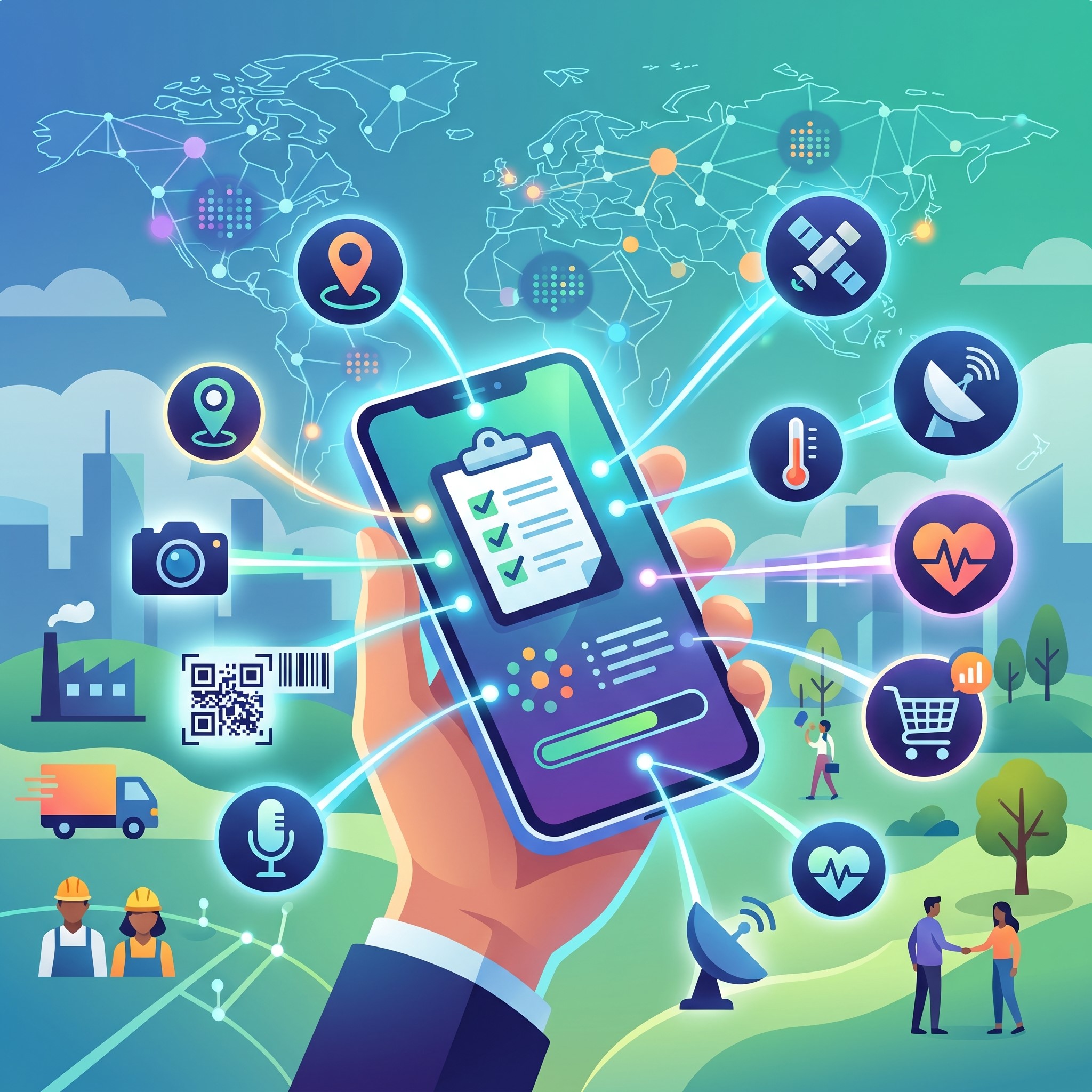
Every major business decision starts with data. The challenge? Collecting that data quickly, accurately, and in a format that’s actually useful. Traditional paper-based methods and desktop-heavy workflows are struggling to keep pace with the speed at which modern organizations operate. Mobile data collection has stepped in to fill that gap—and it’s changing how businesses across every sector gather, manage, and act on information.
This post breaks down what mobile data collection is, how it works, which techniques deliver the best results, and why it’s becoming a cornerstone of data science for business. Whether you’re just starting to explore the concept or looking to upgrade your current approach, you’ll find practical guidance here to help you move faster and make smarter decisions.
What Is Mobile Data Collection—and Why Does It Matter?
Mobile data collection is the process of gathering information using mobile devices such as smartphones and tablets, typically through specialized apps or platforms. Rather than recording data on paper or returning to a desktop computer to log information, field teams can capture and submit data in real time—from anywhere.
The impact of this shift is significant. Delayed data entry creates errors, gaps, and inconsistencies. By the time paper forms are transcribed and analyzed, the insights they contain may already be outdated. Mobile collection eliminates that lag. Data flows directly from the point of capture into centralized systems, giving decision-makers access to accurate, up-to-date information when they need it most.
This matters enormously for organizations that rely on field operations—logistics companies tracking deliveries, healthcare workers recording patient information, agricultural businesses monitoring crop conditions, or retail teams auditing store compliance. In each case, the speed and accuracy of data collection directly affects the quality of decisions made further up the chain.
How Mobile Data Collection Fits Into Modern Data Science for Business
 The rise of mobile data collection didn’t happen in isolation. It’s part of a broader transformation in how businesses use data to drive strategy. Data science for business has moved from a niche technical discipline to a mainstream competitive advantage—and mobile collection is one of the key pipelines feeding that ecosystem.
When field data flows seamlessly into analytics platforms, businesses can run models, identify patterns, and generate insights at a speed that was simply impossible a decade ago. Sales teams can see real-time inventory levels. Operations managers can track equipment performance across multiple sites. Public health organizations can monitor disease spread as it unfolds.
For professionals building skills in this area, even a data science minor provides a foundation for understanding how raw data moves through collection, processing, and analysis stages. Applied across a business context, that understanding translates directly into better system design, smarter tool selection, and more reliable outcomes.
The connection between mobile collection and data science isn’t just technical—it’s strategic. Organizations that build strong mobile collection pipelines are better positioned to act on data insights quickly, adapt to change, and outpace competitors still relying on manual processes.
Core Mobile Data Collection Techniques Worth Knowing
 Not all mobile data collection looks the same. Different use cases call for different approaches, and understanding the range of available data collection techniques helps organizations choose the right fit.
Form-Based Data Entry
The most common technique involves digital forms built using mobile data collection platforms such as KoBoToolbox, Fulcrum, or Google Forms. Field teams fill out structured forms on their devices, which automatically validate inputs and submit responses to a central database. Logic-based branching—where one answer triggers a different set of follow-up questions—reduces irrelevant data and improves form completion rates.
GPS and Location Tagging
Many mobile platforms allow data points to be automatically tagged with GPS coordinates. This is particularly valuable for asset tracking, environmental monitoring, and field surveys where geographic context is critical. Rather than asking a field worker to manually record a location, the device captures it automatically, reducing both effort and error.
Photo and Multimedia Capture
Modern mobile data collection goes beyond text and numbers. Field teams can attach photos, audio recordings, and video directly to data submissions. A property inspector can photograph structural damage. A food safety auditor can document a compliance issue. A utility technician can record a video note about equipment behavior. These multimedia elements add context that numbers alone cannot provide.
Barcode and QR Code Scanning
For inventory management, asset tracking, and logistics operations, barcode and QR code scanning via mobile devices dramatically speeds up data entry. Rather than manually typing product codes or serial numbers, a scan takes a fraction of a second and eliminates transcription errors.
Offline Data Collection
One of the most underrated features of modern mobile collection tools is offline functionality. Field teams operating in remote areas—mines, rural farms, disaster zones—can’t always rely on stable connectivity. The best platforms allow data to be captured offline and automatically synced when a connection is restored, ensuring no information is lost.
Sensor-Integrated Collection
Advanced mobile data collection techniques integrate with IoT sensors and wearable devices, allowing automatic data capture without manual input. Temperature sensors in cold chain logistics, accelerometers in safety equipment, and environmental monitors in agriculture can all feed data directly into mobile platforms for immediate analysis.
Key Benefits of Switching to Mobile Data Collection
The advantages of mobile data collection extend well beyond saving time on paperwork. Here’s where organizations see the most meaningful impact.
Faster Turnaround From Field to Decision
The most immediate benefit is speed. Data captured in the field arrives in analytical systems within seconds rather than days. For time-sensitive decisions—route adjustments, safety responses, supply chain interventions—this speed is not a nice-to-have. It’s operationally critical.
Higher Data Accuracy
Manual data entry is prone to errors: illegible handwriting, miskeyed numbers, missing fields. Mobile platforms enforce data validation rules that prevent common mistakes before a form is even submitted. Drop-down menus replace free-text fields where possible. Required fields prevent incomplete submissions. The result is cleaner data that requires less cleanup before analysis.
Reduced Operational Costs
Paper-based data collection is more expensive than it looks. Printing, storage, transportation, and manual transcription all carry costs—both in money and time. Mobile collection eliminates most of these. Over time, the savings compound, particularly for organizations running large-scale field operations.
Better Team Accountability and Transparency
When field data is timestamped, GPS-tagged, and submitted in real time, it creates a clear audit trail. Managers can see where data was collected, when it was submitted, and by whom. This level of transparency improves accountability without requiring micromanagement.
Scalability Across Teams and Geographies
A mobile data collection platform that works for five field workers also works for five hundred. As organizations grow or expand into new regions, the same tools and workflows scale with them. Onboarding new team members becomes faster when the process is standardized through a single platform.
Choosing the Right Mobile Data Collection Platform
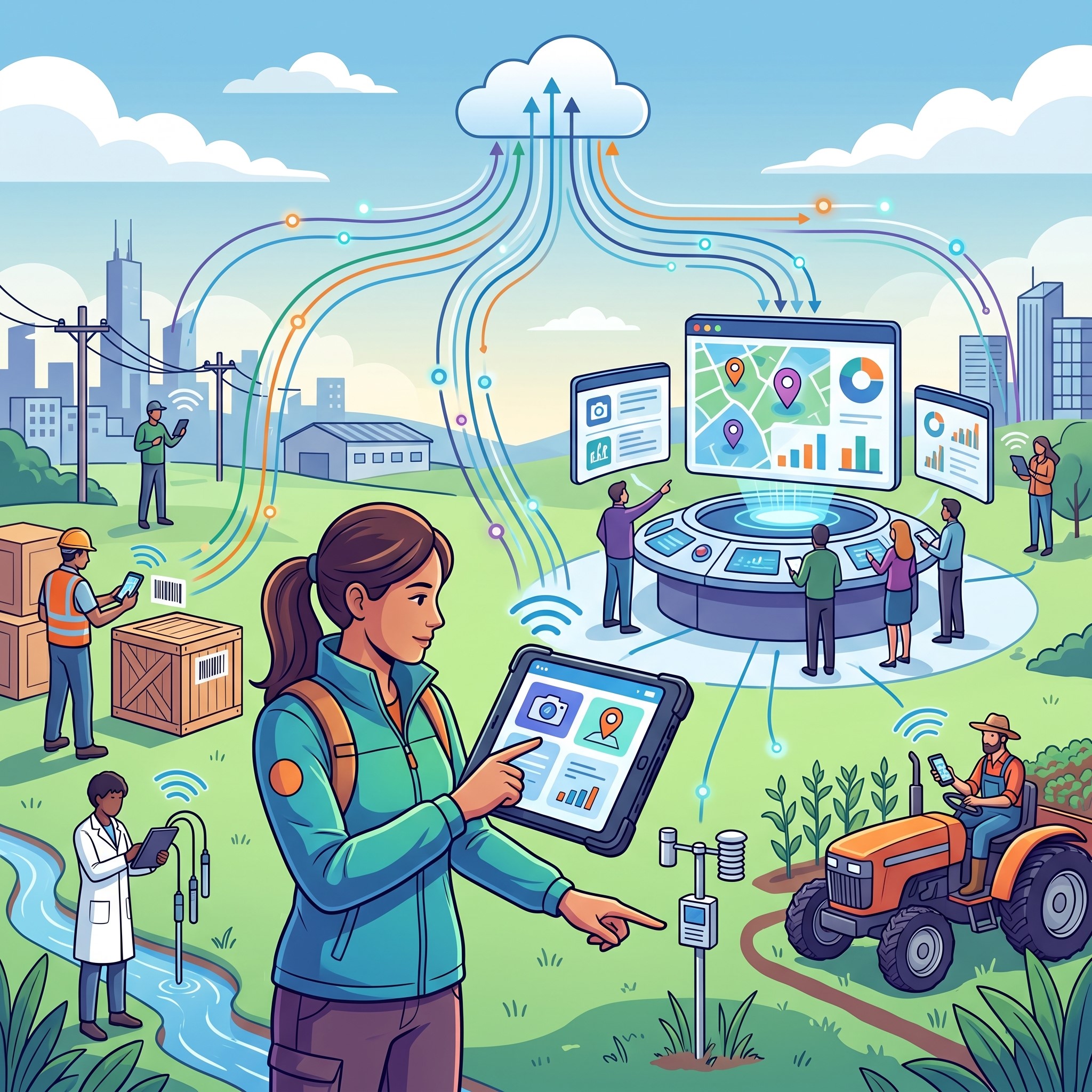 With dozens of platforms on the market, selecting the right one depends on several factors.
Data complexity: If your forms are simple—a few fields and a photo—almost any platform will do. If you need conditional logic, multiple data types, and integration with external databases, you’ll need a more capable solution.
Connectivity requirements: Teams working in areas with unreliable internet need a platform with robust offline functionality. Not all tools handle this equally well.
Integration needs: Data is only useful if it connects to the systems where decisions are made. Look for platforms that offer API integrations with your CRM, ERP, or business intelligence tools.
Security and compliance: For healthcare, finance, or government applications, data security and regulatory compliance are non-negotiable. Ensure the platform meets the required standards for your industry.
Ease of use: The best platform in the world won’t deliver results if field teams find it frustrating. Prioritize tools with clean interfaces and minimal training requirements.
Popular platforms worth evaluating include Fulcrum, KoBoToolbox, Survey123 by Esri, Magpi, and Salesforce Field Service. Each has distinct strengths depending on use case, industry, and scale.
Common Mistakes Organizations Make With Mobile Data Collection
Adopting mobile data collection doesn’t guarantee better outcomes. Organizations that rush implementation or neglect the details often run into avoidable problems.
Over-complicating forms: Long, complex forms frustrate field workers and lead to incomplete or inaccurate submissions. Keep forms as short as possible. Every field should have a clear purpose.
Skipping field worker training: Technology is only as effective as the people using it. Investing in proper onboarding and training—even just an hour—dramatically improves data quality and adoption rates.
Neglecting data governance: Mobile collection generates a lot of data fast. Without clear policies on how data is stored, accessed, and used, organizations quickly find themselves overwhelmed by information they can’t effectively manage.
Ignoring data quality monitoring: Regular audits of incoming data help catch problems early. If a particular field is consistently left blank or filled with nonsensical values, the form design—or the training—needs adjustment.
Failing to connect collection to decision-making: Data that sits in a database without reaching the right decision-makers at the right time is wasted. The pipeline from collection to analysis to action needs to be clearly mapped and actively maintained.
The Road Ahead: Where Mobile Data Collection Is Going
The capabilities of mobile data collection platforms are expanding rapidly. AI-powered validation is beginning to flag suspicious entries automatically. Computer vision tools can analyze photos submitted through mobile forms and extract structured data from images. Predictive analytics built directly into collection platforms are starting to offer real-time recommendations as data comes in.
For organizations building data science for business capabilities, mobile data collection will increasingly serve as the critical first link in an automated, intelligent data pipeline. The companies investing in that infrastructure now are building a structural advantage that will be hard for slower-moving competitors to close.
Professionals developing expertise in this space—including those studying data science, even at the introductory level of a data science minor—will find that mobile collection is one of the most practical and in-demand applications of the broader discipline. Understanding how data flows from field to insight is foundational to designing systems that actually work at scale.
Frequently Asked Questions (FAQs)
1. What is mobile data collection?
Mobile data collection is the process of gathering information using smartphones, tablets, or mobile apps instead of paper forms or desktop systems. Data is captured in real time and sent directly to a centralized database for analysis.
2. Why is mobile data collection important for businesses?
It improves speed, accuracy, and efficiency by eliminating manual data entry delays. Businesses get real-time insights, reduced errors, and faster decision-making, especially in field operations like logistics, healthcare, and retail.
3. How does mobile data collection work?
Field workers use mobile apps to fill out digital forms, capture photos, scan barcodes, or record GPS data. The information is then automatically synced to a cloud system or database when internet access is available.
4. What industries use mobile data collection?
It is widely used in logistics, agriculture, healthcare, construction, retail, environmental research, and government field operations—anywhere real-time field data is needed.
5. What are the main benefits of mobile data collection?
Key benefits include faster data processing, improved accuracy, reduced operational costs, better accountability, offline data capture, and scalable workflows across teams and locations.
6. Can mobile data collection work without internet?
Yes. Many mobile data collection apps support offline mode, allowing users to collect and store data without connectivity. The data automatically syncs once the device reconnects to the internet.
7. What tools are used for mobile data collection?
Popular tools include Fulcrum, KoBoToolbox, Survey123 by Esri, Magpi, and Google Forms. These platforms offer features like form building, GPS tracking, and data integration.
8. How is mobile data collection different from traditional methods?
Unlike paper-based or desktop-only systems, mobile data collection is faster, more accurate, and supports real-time syncing, multimedia capture, and automation features that traditional methods lack.
9. Is mobile data collection secure?
Yes, most modern platforms use encryption, authentication, and secure cloud storage to protect data. However, security also depends on choosing a compliant platform and following best practices.
10. What is the future of mobile data collection?
The future includes AI-powered validation, real-time analytics, image recognition, IoT integration, and predictive insights—making data collection smarter and more automated than ever before.
Start Building a Smarter Data Collection Strategy
Mobile data collection solves one of the most persistent challenges in business operations: the gap between what happens in the field and what decision-makers know about it. By replacing paper forms and delayed processes with real-time, validated, GPS-tagged digital submissions, organizations gain a level of operational visibility that fundamentally changes how quickly and confidently they can act.
The right approach starts with clarity—about what data you need, how you’ll collect it, and how it will feed into your decision-making processes. From there, selecting the right platform, training your teams well, and maintaining data quality over time will determine whether your mobile data collection investment pays off.